
We have been in Switzerland for five days, but as of tonight, we will have slept in four places – yes, we have moved again! More about that tomorrow.
Author Archives: jo
How friendly are the Swiss?
When the woman took a seat across from us on the train ride back from Murten, she looked normal.
She had come on with a pack of senior citizens, all rattling in lively conversation. She hovered over some people who we thought must be old friends, clutching about half-dozen twigs in her hand. They were only about two feet long – too short for basket-weaving.
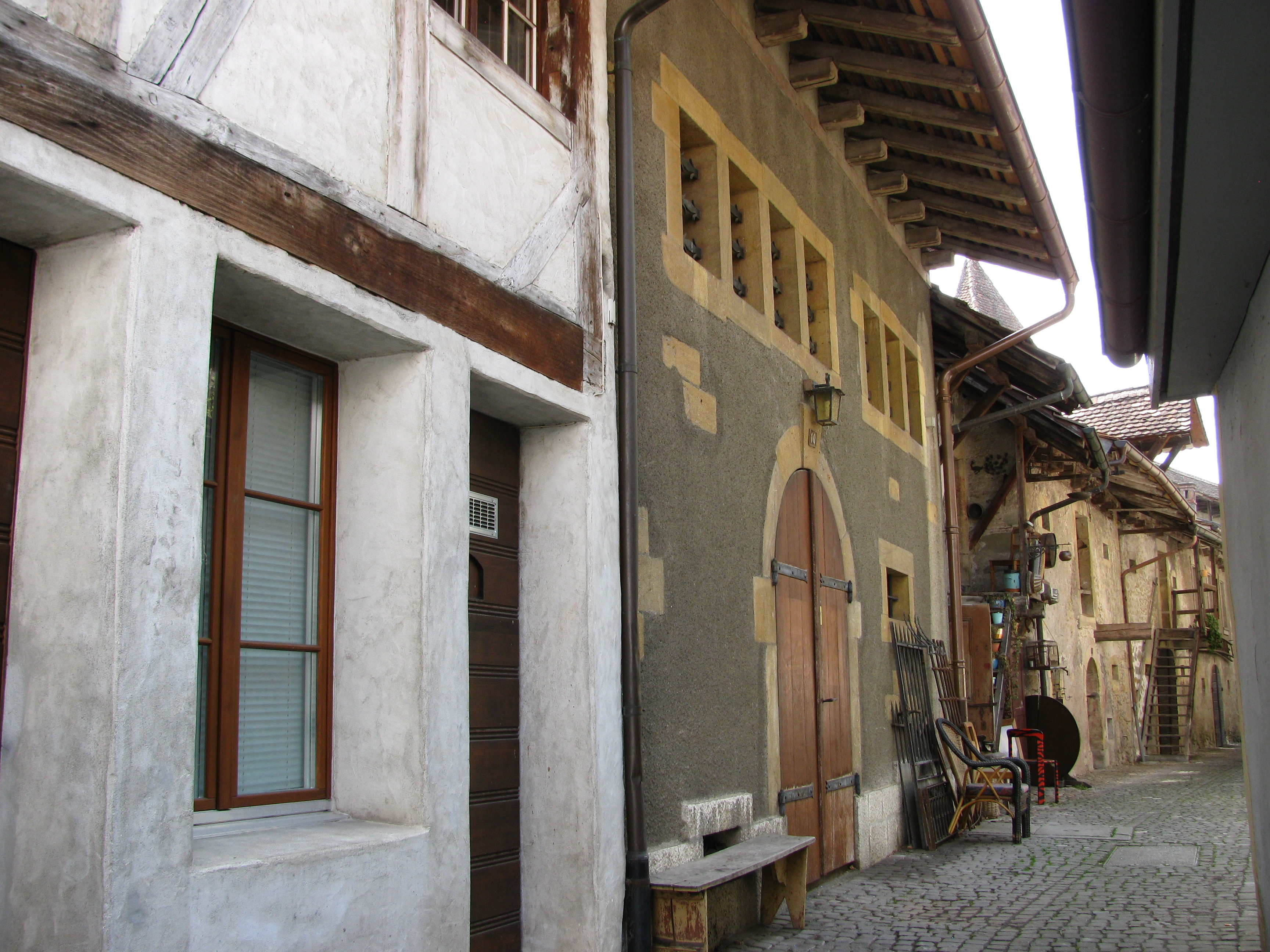
Snug alleyway in Murten.
She then eyed our cluster of seats, flopped down with an exaggerated gasp of exhaustion, and appraised us silently with her enormous brown eyes. Her chin-length hair was auburn brown and her posture suggested she was fit, but she had bags under her eyes and what looked like a patch of skin cancer on her cheek – she could have been 55 or 80.
She addressed us in German, then raised her eyebrows at our fumbling response: “No German,” not meaning that there are no Germans, or that we refuse to associate with Germans, much less attempt the language. She leaned closer, waved at the bundle of twigs and said in English, “I put sticks in and get wine. You know, sticks, water.”
No, we didn’t know, but we were sitting knee-to-knee within grabbing distance so we nodded politely and mentally calculated how long to the next train stop.
Was she insane? Would she pinch one of us by the arm and force more alcohol-related recipes on us?
As she pressed us into conversation with her not-totally-broken, but not quite all-there-English, we tried to not look like we were thinking about the distance to the next train station, but it didn’t work. She somehow deduced that our estimation of her mental faculties was not as it should be, even though neither of us gave into the rising urge to claw madly at the stop-buttons and demand the train doors open (we had already done that earlier on the ride into Murten).
She returned to the wine-twig topic and elaborated until her meaning became clear: That she would stick the twigs (dried vines) in the ground, water them, and eventually they would take root, produce grapes and then wine. She was not expecting to get wine from them that evening.
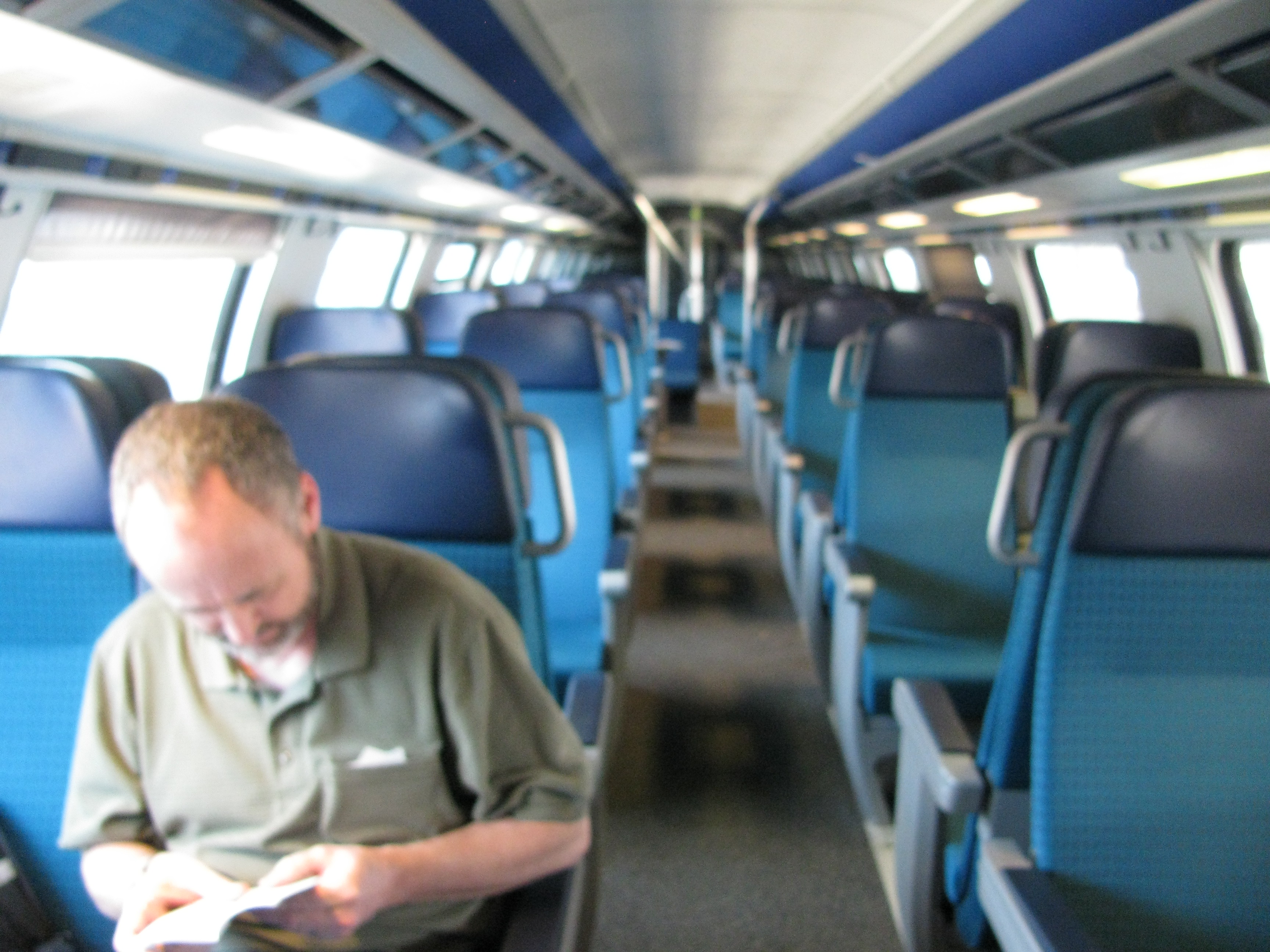
Swiss trains are spotless, their schedules and routes relatively easy to understand, but be ready for a sociable time as the Swiss love to chat.
Her mental stability established, we relaxed.
We have seen signs of such friendliness before. The day earlier, in a grocery store line-up a woman discerned our foreign-ness and invited us on a boat trip over Lake Biel. Suspicious North Americans that we are, we politely evaded the question, but we can’t help noticing that overall the Swiss are extraordinarily friendly.
Either that, or they are all stalkers-in-waiting. We shall see.
What’s in a name? Murten or Morat?

The view from Murten/Morat's castle ramparts where on June 22, 1476, 2,000 Murtonians/Moratians beat 20,000 invading French back into the lake, causing many of the armor-clad French to drown. The townspeople were aided by about 10,000 neighbours. This battle is considered seminal to the creation of the Swiss Union. Note: The French were hungover from partying the night before. True story. Also of note: The Swiss are famous for their mercenary soldiers. By this we conclude that it is not the legendary Swiss neutrality that protects against foreign invasion, but Swiss ferocity.
It began with us sprinting through the train much to the horror of our fellow passengers, but it wasn’t really our fault. We blame multiculturalism and its child, multilingualism.
In Canada, multilingualism earns high respect, but here in Europe it leads to high-annoyance. My international readers will correct me if I’m wrong, but even the multilingual Swiss can have trouble clearing language hurdles.***
As an example, the lease negotiations between Dave’s corporate rep and our apartment’s leasing agent were conducted in English, although they both spoke French and German. So why English? Because it was their strongest common language and to use the descriptor “strongest” is stretching it.
We, the mute, listened as they waffled back and forth in three not-very-good languages, hearing one question spawn the response “yes” at one moment and “no” in the next. Consequently, the terms of our lease are a mystery to us.
It brought back memories of my multilingual European father who back in the early 1960s decided we would speak English only, saying that it was better to be eloquent in one language than an idiot in many.
Before you write your angry letters, let me say I know there are people out there who are masters in many languages. I just have not run into many yet.
But I drift from my topic, which is Murten/Morat and how we got lost trying to get there. I don’t drift too far, though, as language formed the foundation for our trouble.
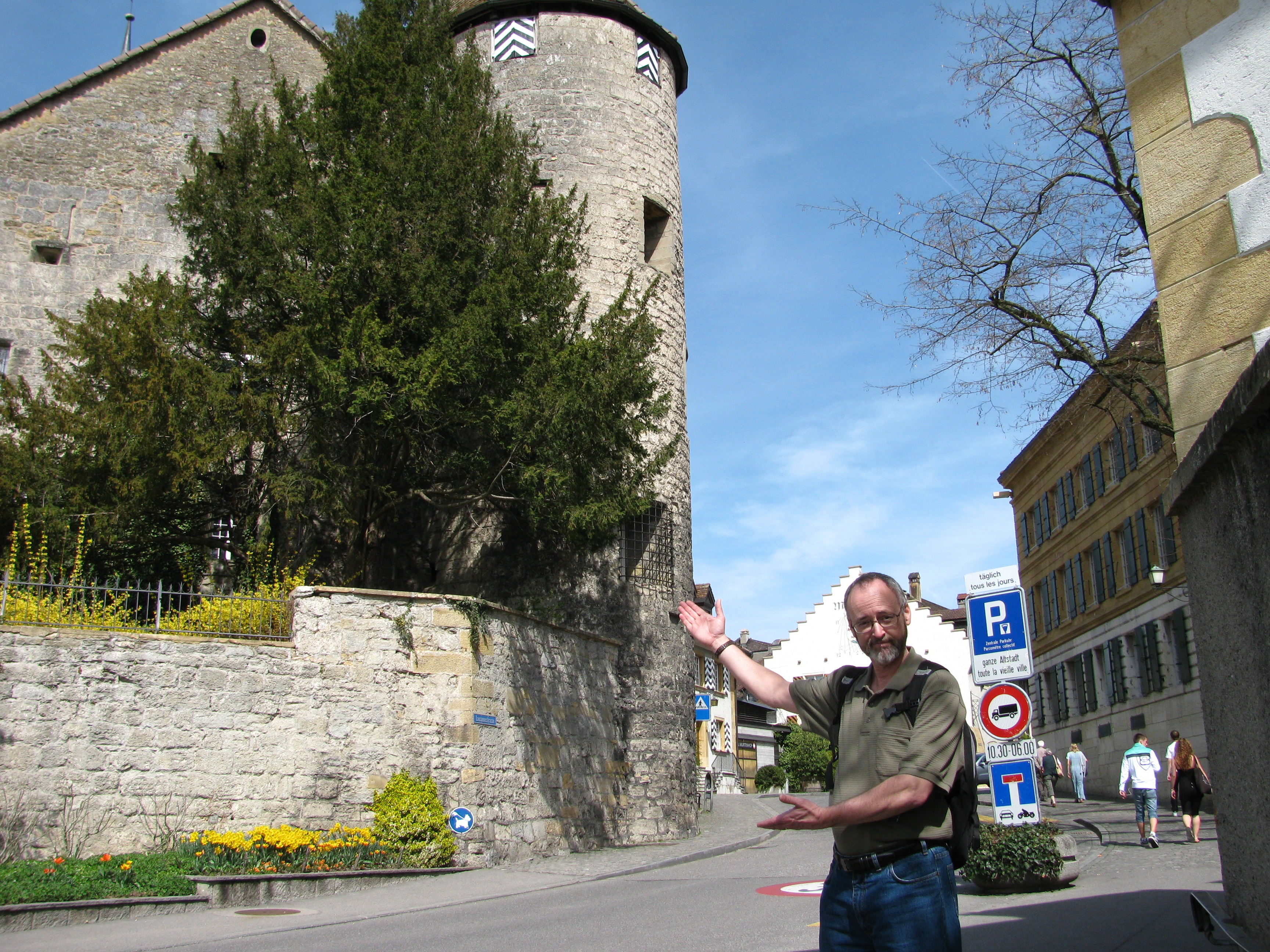
Medieval castle ramparts in Murten/Morat.
We got on the right train, heading in the right direction. As Biel fell behind us and the Swiss countryside opened up, we paid attention to town signs and watched the villages for castle ramparts and ancient churches – the attractions that were bringing us to Murten.
After what seemed a reasonable interval, we began to worry that we had missed our stop.
I recalled hearing the train’s recorded announcement heralding “Morat,” which was not on the map or in the train schedule. As it turns out, Morat is the French name for Murten.
We learned this later – that Swiss villages/towns frequently have both German and French names, but for some reason hidden in Swiss Rail’s corporate headquarters, they switch languages in a sporadic manner. Maybe it prevents invasion from foreign armies, or too many tourists amassing at any single point.
In any case, that is how we missed our stop.

Looking out from Cressier's rail station, Switzerland. April 2011. Clearly, we were in trouble.
We got out at Cressier, which by Swiss standards is absolute Heck as you can see by this photo (right), and then feared that this being a Sunday, there might not be a train for hours. Stuck in Cressier! Switzerland’s “Brugge.”
We were wrong about that and with some help, soon boarded a train returning to Murten.
But our travel-nerves were jangled, so we watched anxiously for signs of Murten – or Morat, call it what you want cause that’s what the Swiss do – and the minute we saw something that remotely resembled the pictures in our guidebook, we got on our feet. The train came to a stop, but the doors wouldn’t open. We don’t know how trains work here, so we sprinted in a frantic manner through the cars looking for an open door, like rats stuck in a trap.
One of us may have shouted, “Stop the train! Let us out, let us out, we want to go to Murten,” but I’m not saying who. At that point, a passenger said, “We’re not there yet.”
It is comforting to know that we gave our fellow passengers something to laugh about on that otherwise quiet ride. It is also comforting to know that we will never see any of those people again.
As it happened, the doors did not open because we weren’t actually at a station yet. If we had gotten out, we would have plunged down a steep incline. So sorry to have missed that.
By the way, we have also learned that the buttons we thought were for opening doors were actually emergency-stop buttons.
Eventually, we found our way to Murten-Morat, a charming medieval village by any name at all.
***This is a rant, and so is not bound by logic. If my Dad had decided to school us in European languages, our little sprint could have been averted. But where would be the fun in that?
A few things I’ve noticed in Biel
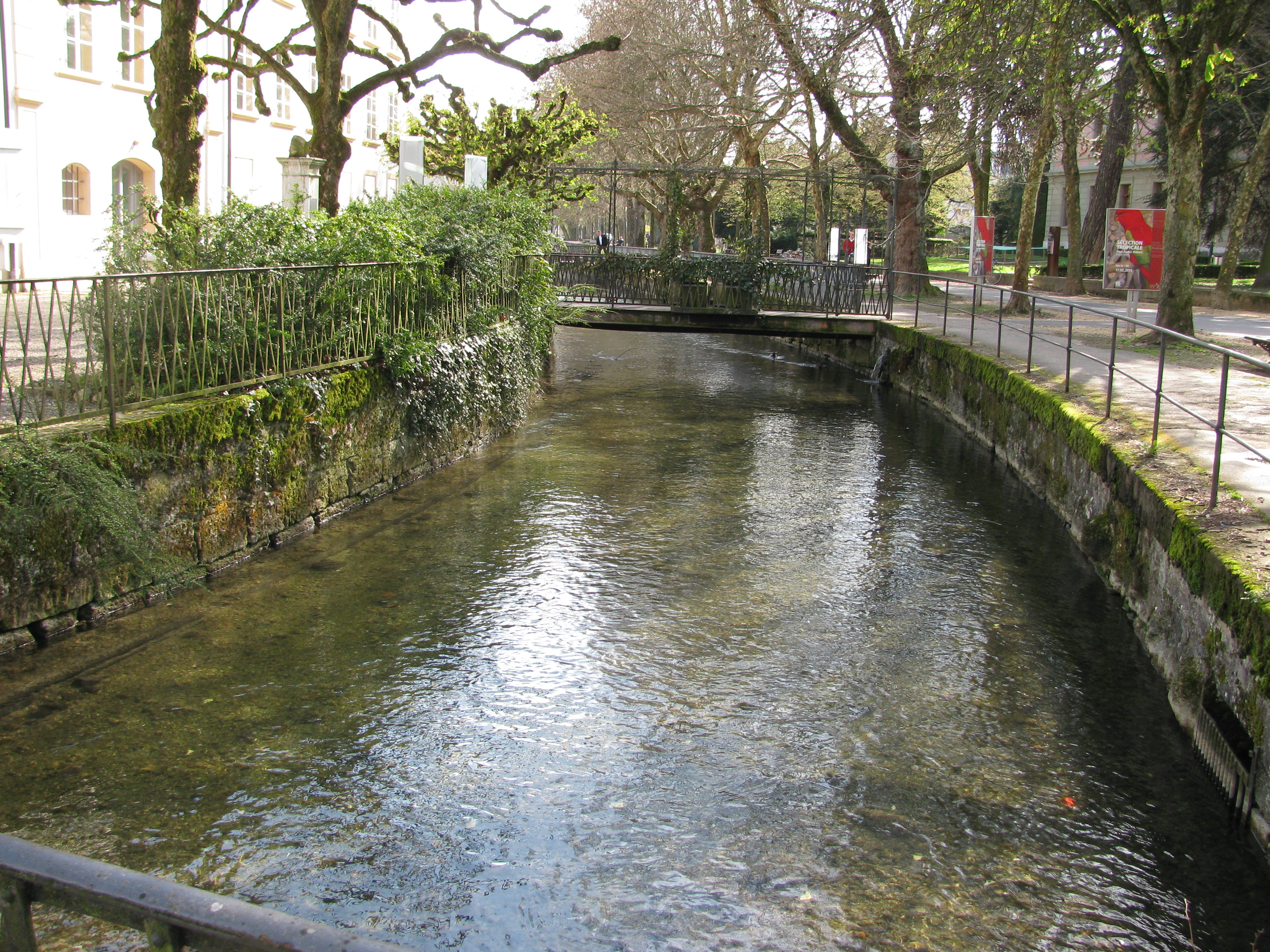
A secondary canal in Biel. Locals here think this town is trash, but I don't see anything wrong with it.
It is our first Monday in Switzerland and Dave’s first full day at work, and so now we settle into whatever normal looks like for our time here.
Of course, there is no “normal” yet – there’s too much we don’t know about this country, mostly because we are arrogant Anglophones and not very good with the local languages, although, I am improving.
I managed to tell a shopkeeper her wares were too expensive (tres cher), but only for today (seulement pour aujourd’hui) because I had topped out my shopping budget and I would be back (retourner moi – although, I’m not sure about this particular phrase, maybe it is retournez moi).
No one has slapped me or thrown out onto the street, so I suppose my French is not so bad.
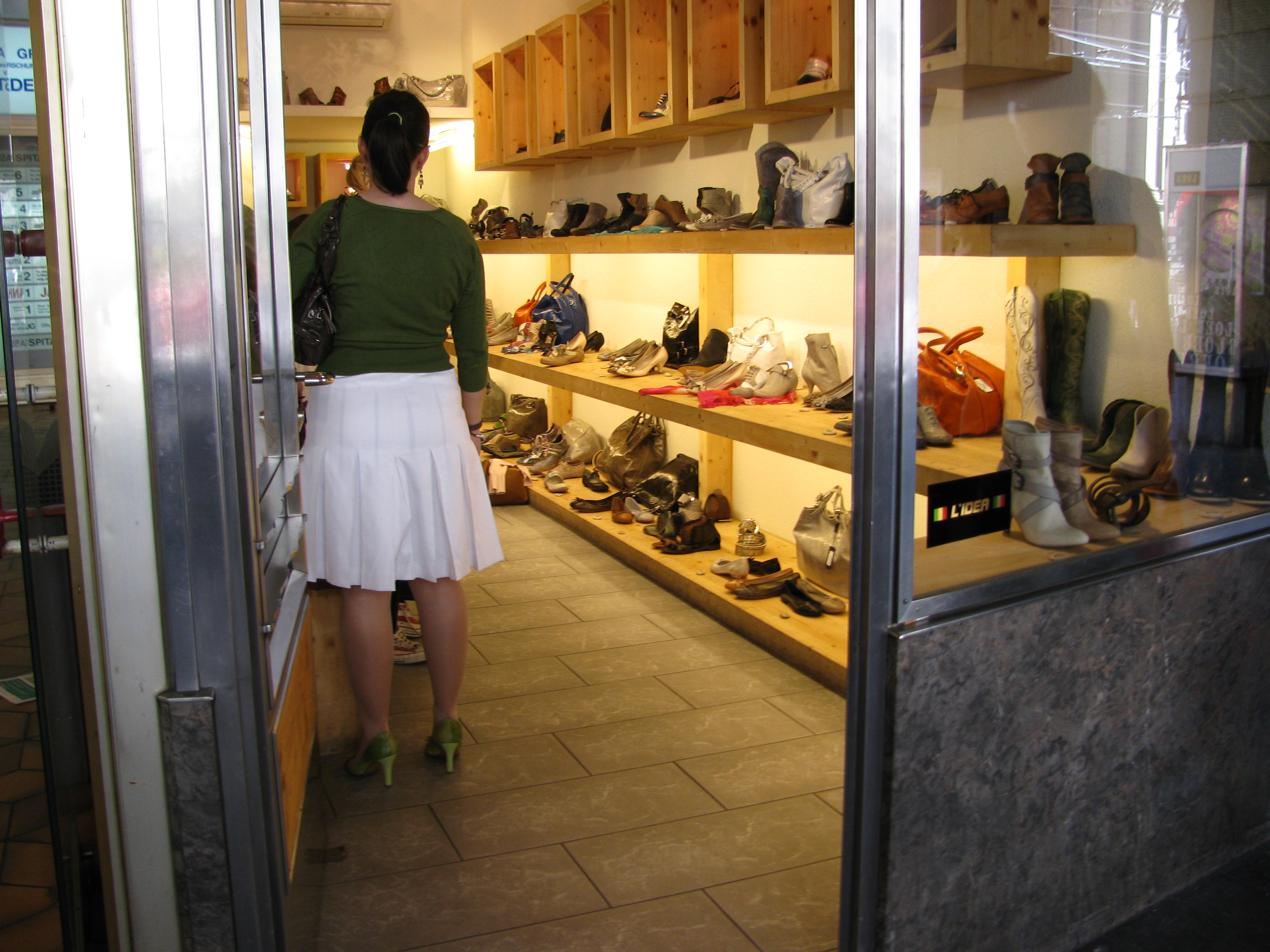
Shoes, shoes, shoes and more shoes.
I’ve also discovered that European arrogance about fashion is well-deserved. Ordinary shops here carry fascinating clothes – some too fascinating for me, and others that are very forgiving for my middle-aged figure.
And for reasons I cannot yet unearth, shoe stores are everywhere, even in the farmers market.
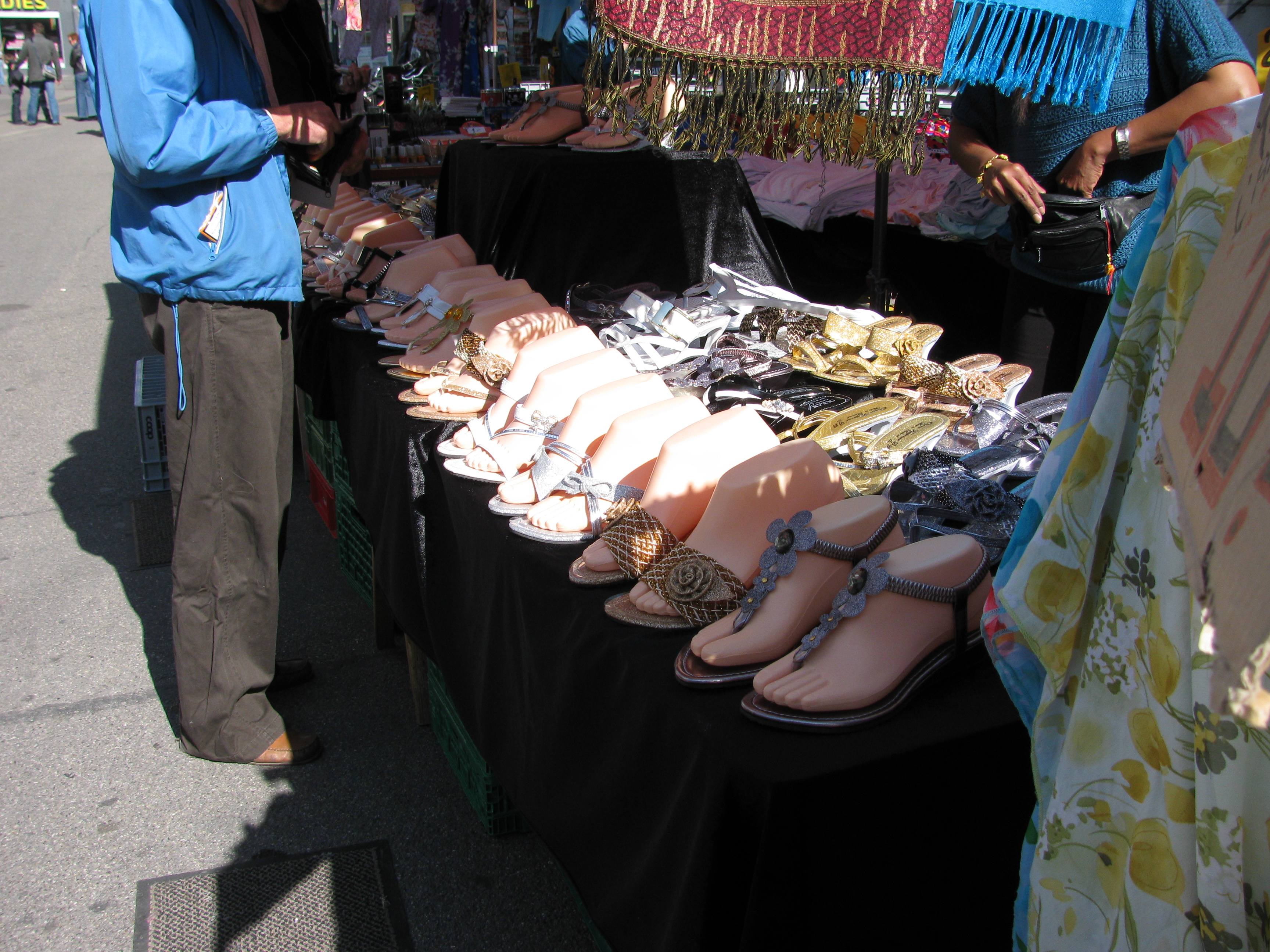
Farmers market shoe sales. Go figure.
Within a few blocks of our home are three large grocery stores, making downtown living very easy. To put that in perspective for Victorians, imagine seeing a Safeway at Broughton, Fort and Pandora, or for Winnipeggers, grocery stores at Portage, Donald and Hargrave.
The police here are invisible. Where Victoria Police can be seen biking down Wharf Street, Saanich Police cruising down Tillicum, and the RCMP just about anywhere at any time, we’ve only seen the Swiss police on the streets twice – at the Tamil demonstration in Bern and a few blocks away corralling an intoxicated man outside a grocery store.*
I don’t know what this means – if Switzerland has low crime rates or underfunded police departments, but I am not going to think about that. I am going to think about how to explain how we got lost on the train ride to Murten, which I plan to write about tomorrow.
* It may look odd that I list three police departments when describing Victoria, B.C.’s policing, but that is what there is. Victoria-regional law enforcement is made up of multiple municipal forces.
More food/restaurant reviews.
Check out my new food reviews here. https://hobonotes.com/dining-recipes/
Note: You’ll need to scroll down. I don’t know how to get reviews to post from the top yet.
Bern, pronounced Behhhrrn
Telling any Swiss person that we were travelling to Bern (burn) produced puzzled frowns. Now we know why. We were saying it all wrong. We would feel bad about this, but how can the Swiss expect us to grasp place-pronunciation when they themselves can’t make up their minds what to call anything.

Bern: This clock tower was once a gate in the town ramparts, however, the city outgrew its boundaries twice.
We are sitting on a French-German cusp, and to keep everyone happy, every place has both a French and German name, such as our current place of residence Biel-Bienne. Murten is also Morat. All along the train tracks are villages and towns with German names such as Mongbratzverstenspiel and a corresponding French name that doesn’t bear any resemblance to the German counterpart, such as Le Bleu. Okay, I just made up both those names, but if I had the strength to look at a map, I could pull out a few excellent examples.
Bern, happily, seems to run along on a single name, perhaps because it is the nation’s capital and they can’t afford to have a Franco-Germanic squawk about it without creating terrible unrest. I don’t know that. I am still making up things, owing to the linguistic spaghetti forming inside my brain.

Dave seated at Albert Einstein's desk when he worked at the patent office in Bern. Einstein is said to have made his greatest discoveries while living in Bern between 1901 to 1909. Then he left his wife and married his cousin. Ugh. In the meantime, Dave developed several new theories while seated at Einstein's desk.
A 30-minute train ride from Biel (pronounced Beeeel), Bern’s historic quarter covers over a peninsula formed by a bend of the Aare River. It was founded in 1191 and is built of porous green-grey sandstone that, like Spain’s famous golden sandstone buildings, can be scrubbed away rather easily, hence the Swiss have built into the walls to create what they call “arcades,” broad covered walkways drawing pedestrians behind the exterior, theoretically preventing them from touching the sandstone portions.
Of course, the first thing we did on our arrival to Bern was to head to the sandstone walls and scrub away, just to see if our guidebook was right. It was. I should say, Bernese sandstone is not as delicate as Spanish sandstone. Nor is it as pretty. The entire town is a murky gray-green, but this does not take away from its impressive architecture.
While there, we saw a large group of dark-skinned people filling the town square as Swiss police took positions and parked paddy wagons around. I approached the Swiss police as though they were Saanich police*, ie. friendly, non-combative and wishing something would happen.
“Is this a concert?” I asked. They laughed heartily while tasering me a few times before throwing me into the paddy wagon.
No, they did not do this, but can you imagine if they did? Now this would be one heck of a blog. In fact, they gave me some evasive answers (a la Victoria police, aka VicPD**), so I did the only thing I could and that was walk into the midst of the protesters and look for someone who did not look away as I approached.
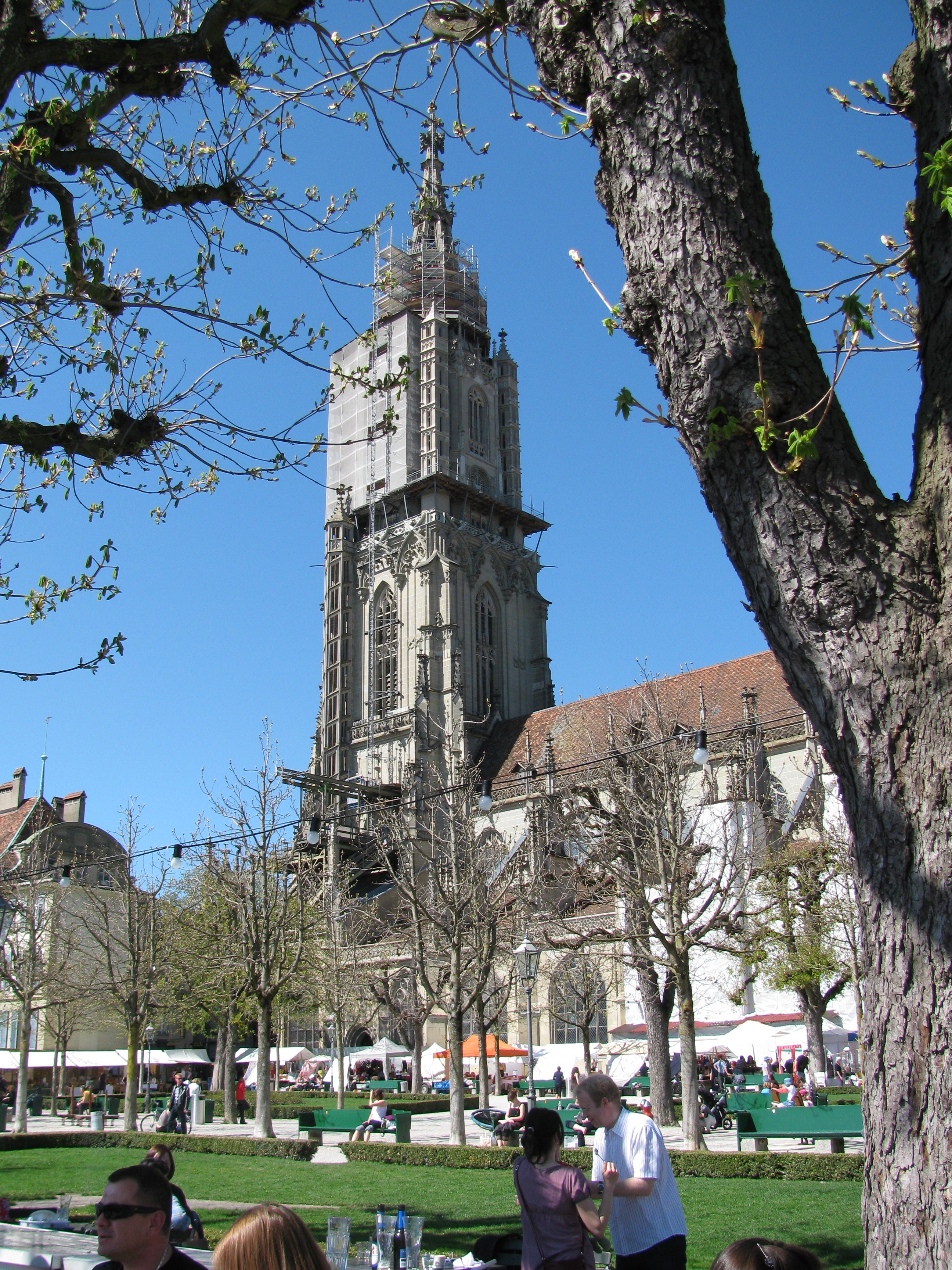
Bern Munster Cathedrale, dating back to 1421. While we were inside, the organist kicked the massive pipe organ into gear. Stunning.
This is what retired reporters do – look for trouble. Although, we don’t know it, because years of angling to get as close as possible to ground-zero of any event has numbed our common sense. We are in a stupor.
I found an affable 35-40-year-old man, rather pudgy who looked like someone I could possibly outrun and asked him “what’s up.” He very kindly explained this was the Swiss Tamil community and they were demonstrating to dissuade the Swiss government from deporting Tamil political refugees, also sometimes known as terrorists.
My sons later scolded me, saying that walking into a large group of black people surrounded by police never ends well, but they are wrong. It ended well, with me unharmed, except for my arm which is a little sore from my husband dragging me out of the crowd.
Bern is, by the way, highly recommended as a must-see on any trip to Switzerland. It is truly outstanding.
* Saanich Police is one of the many police departments covering the southern tip of Vancouver Island. Their area is generally considered a low-crime one, but I don’t actually know for sure. Because of this, they are constantly getting teased as “soft” by …
** Victoria Police, the department that covers the urban centre of Victoria, which is full of gritty stuff – drugs, homeless, homicides, and the like.
Blisters and Biel
Wearing new sandals on a day that we would walk 16,538 steps was not really such a great idea, but it is too late to talk about it now. All I can do is soak my feet in saltwater, wrap them up and head out for another hike.
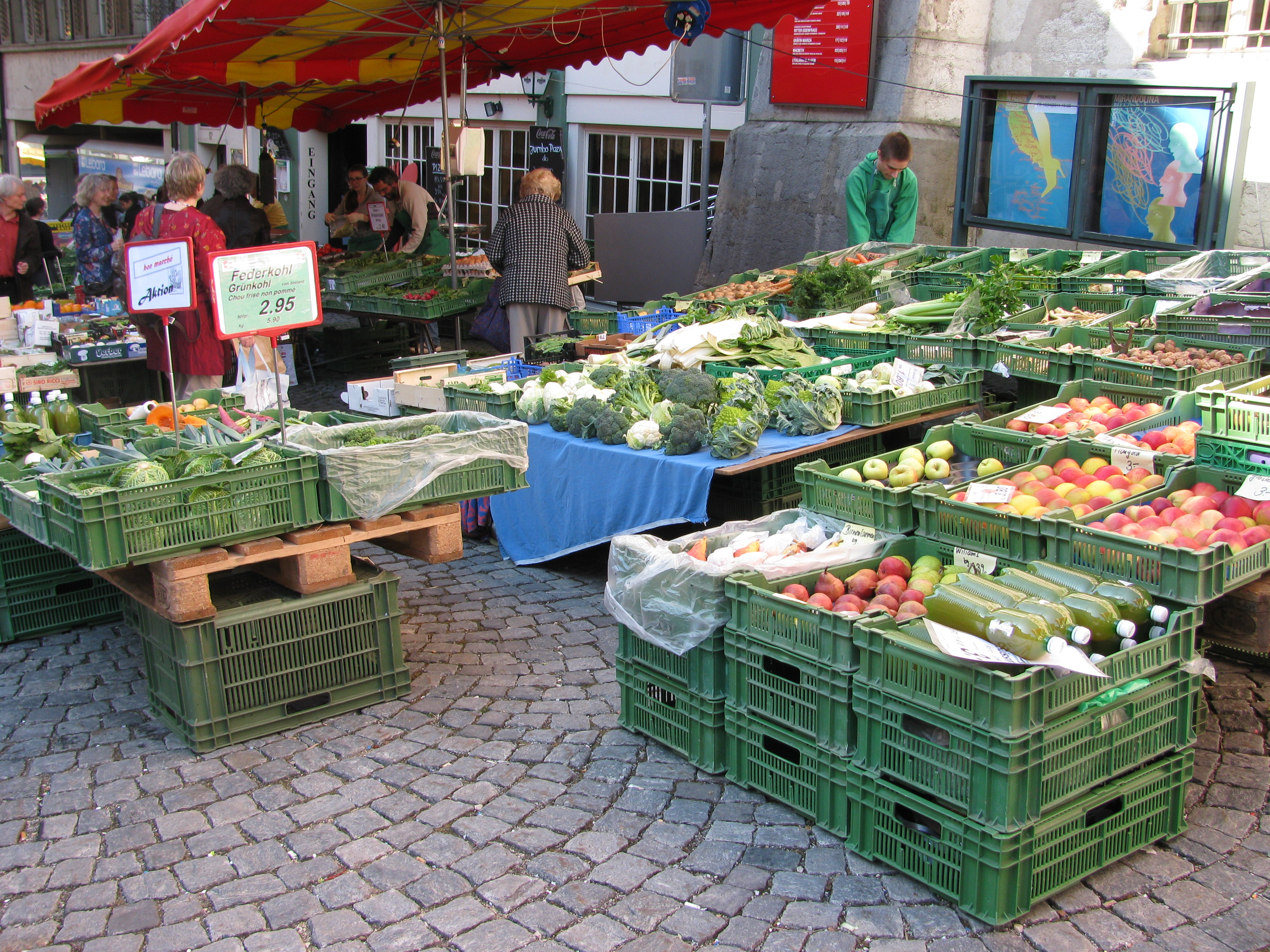
Farmer's market in Biel. Endless volumes of fresh produce, happy farmers, hordes of shoppers all packed into a medieval town setting. Not so bad.
I am in Switzerland. It is required I see new things everyday, even if there are blisters on top of my feet. This is true, by the way. I am afflicted with 360-degrees of blisters.
But enough about that. We began our day by visiting Biel’s allegedly famous Nidaugasse farmer’s market. Nidaugasse may be the name for Biel’s old town, but I am not sure about that, just as I am unsure about everything owing to my cramped German/French language skills.
About 70 farmers and vendors transform Nidaugasse’s sloping grey cobbled streets into avenues of colour, while the air is filled with the aroma of apples and flowers. Maybe living in Switzerland will not be so bad. We stocked up.
Prices were relatively in line with North American farmer market prices, that is to say: They were high. The pain of the pay-up, however, is mitigated by the freshness and flavor of the produce. Real fresh vegetables are pretty much the same anywhere, but every region seems to have something that brings its own something to the table.

Banks of tulips fill the cobblestone streets of Biel's old-town.
In Manitoba, it is the acidic sweetness of giant beefsteak tomatoes, in Northwest Ontario wild blueberries are the jewels, in Victoria it’s Michell’s sweet strawberries and Silver Rill corn, and everything in Georgia. It’s true, Georgia, U.S.A. farmers markets kill in every produce category. Yum. But we’re not in Georgia now. We’re in Switzerland.
I have not determined the stand-out vegetable here, but it may be their giant red-leaf lettuce that is bowling-ball shaped with an apple-crisp base tipped with gossamer burgundy leaves. It tasted as though I had pulled it from the earth only moments before.
We avoided the line-up at the cheese wagon, however, learned later that was a mistake. As Regula, a local Swiss woman told us, “There’s a reason for the line-up,” and that reason is apparently “Corgemont Special” cheese. The market was packed with locals, probably the best indicator of the quality of the offerings. We decided to make the market a Saturday tradition.
After unloading our stuff at our apartment, we hoofed out to the train station for a 30-minute ride to Switzerland’s capital, Bern. I’ll write more about that later. For now, I have to figure out how to bandage up my feet before today’s trip to Murten, a small medieval town about a 45-minute train ride southwest of Biel.
No phone, no help
We woke up around 2 a.m. Saturday morning to the sound of a man snoring in our apartment.
This was not alarming until my jet-lagged brain realized that Dave was awake. We lay there in the dark, trying to imagine the breathing was coming from anywhere but inside our apartment. It was a weird snore – kind of airy like a woman’s, but too voluminous to be anything but male.
We tiptoed around and decided someone was sleeping up against our apartment door out in the hallway.

Our somewhat austere but very sunny flat.
What ensued was a quiet conversation on who to call about this – Switzerland doesn’t have 9-1-1 – they have some other number that we could not remember, but it didn’t matter because we don’t have a phone line, which raises the little-known fact that foreigners have some difficulty in getting local services – a timely blog topic.
The trouble lies in that a person’s credit rating does not necessarily travel with them, so to the Swiss we are like two unreliable 18-year-olds without any credit history. Utility and rental companies also don’t enter into contracts with foreigners until they have a residency permit, which we are still in the process of obtaining (it will take about 10 more days).
And so we do things differently where we can – for example, Dave’s employer is actually the lease-holder on our apartment. They also send a staffer with us on all official business to translate, negotiate and berate wherever necessary.
In this we are lucky – anyone relocating without the benefit of corporate support is really out on a limb, both linguistically and bureaucratically.
But none of that was helpful as we tried to get back to sleep while a potential drifter snoozed only a few yards away. Finally, I got out my mag-lite flashlight, but not the right one. I left the big prison-guard type one back in Canada. This was my mini-mag – roughly the size of three BIC pens taped together.
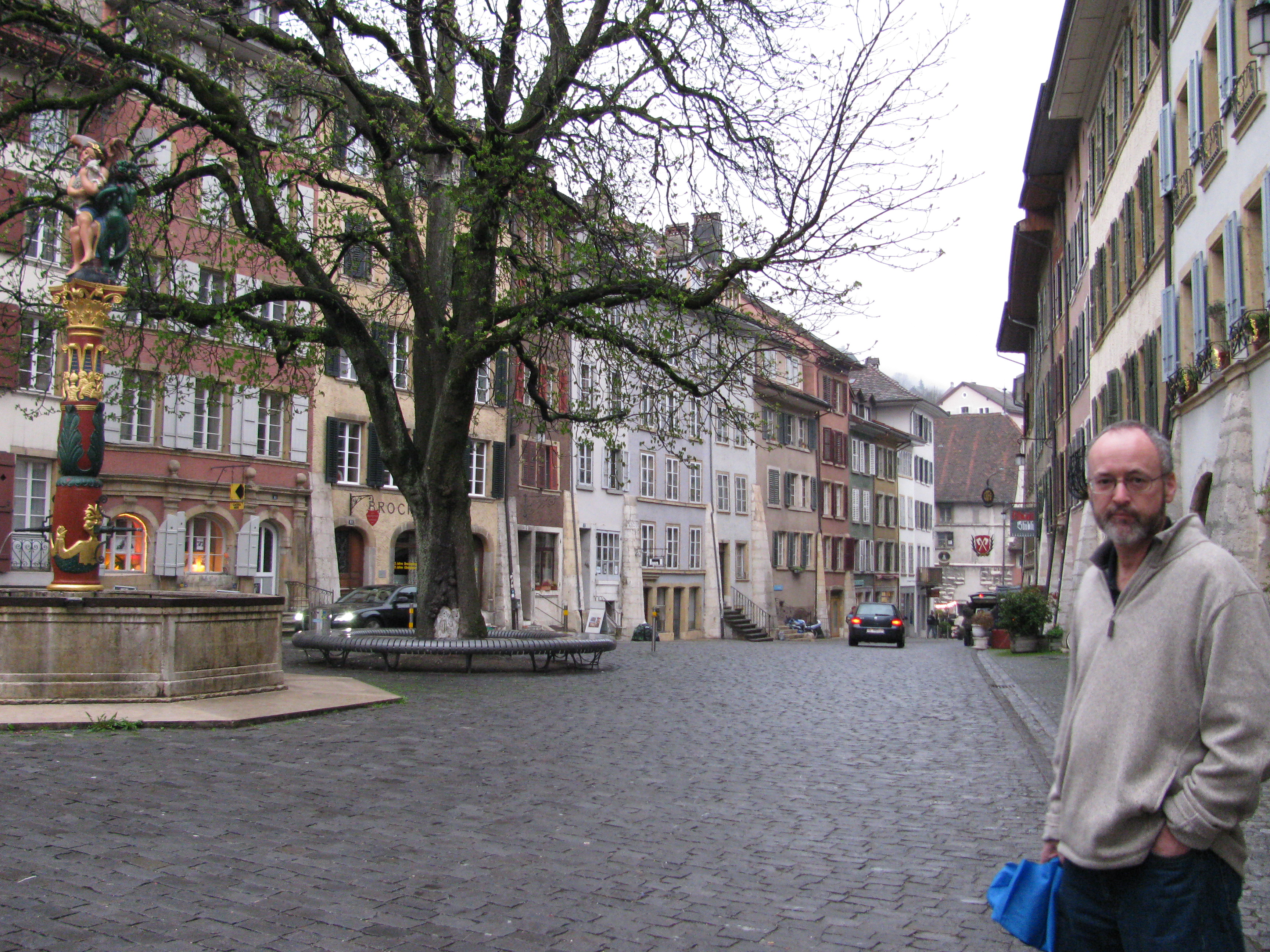
Dave on a 16th-Century street in Biel
Not that we had plans to assault anyone, even someone who was sound asleep. Despite the fact the government and utilities treat us like teenagers, we know we are over 50 and there are some things we just won’t do. Also, my mother is still alive and it would worry her to see headlines, “Middle-age Canadians in Melee with Swiss Homeless Man,” or the more likely headlines (because we are the outsiders here) “Hapless homeless man famous for saving cat from tree is attacked by unregistered foreigners.”
I worked in news; I know this could very easily happen.
Like something out of a sitcom, only without the laughter, we leaned up against the door, brandishing our mini-flashlight and quickly opened the door to find … nothing. And yet, we could still hear the snoring as though someone were standing right next to us.
Further investigation led us to believe it was either the refrigerator venting (fridges here are different – as we learned when living in Spain, they have some strange gas-imbedded coolant system, the details of which I do not understand and therefore readers will be spared any further explanation).
And now it is Saturday morning and we are on our way to the open-air street market, and later to Bern where Dave thinks we will do some sightseeing, but I will, in fact, search for an IKEA.
Easter eggs a la Suisse. They're real eggs - we did not buy any to investigate whether the dye seeps through into the albumen.
In other not-so-exciting-as thinking-a-homeless-man-has-moved-into-the-hallway news:
- Our luggage arrived Thursday night, the green case looking a little worse for wear. I don’t want to say that anyone stomped on it, but it came back with black scuff marks that look like the bottom of a size 9 boot. Nevertheless, even though it had obviously been opened, nothing was missing.
- Dave’s company rep made an appointment with the Swiss Police for us to take our photos and fingerprints. Anyone who has undergone a residency application process will know how shocking that last sentence was – that foreigners would actually be granted the courtesy of an appointment? Seemed too good to be true, but when we showed up about 15 minutes early, we were waved inside immediately. The clerk was polite, efficient and we were out of there without having to register DNA samples in no time, leading me to think pleasant thoughts about the Swiss.
Day Two in Switzerland

I studied French for three months to get ready for living in Switzerland. Apparently, I made a mistake.
Things are looking up. Early this morning as we enjoyed a wonderful breakfast in the Hotel Elite’s posh dining room, a waiter with a heavy accent asked if we would like him to take our photograph together.
I said yes, thinking that he had asked if I wanted a whole pot of coffee at our table. As I said, his accent was heavy. I was pretty enthusiastic about the pot of coffee, which did not materialize. Not so enthusiastic about the picture, which accurately records the previous day’s trauma on my face.
And then I lost the digital photos – some how. Some way. It was wonderful.
After breakfast we trundled down to the Hotel Mercure to meet a representative who would walk us through our setting-up day. We waited around for an apartment rental agent who showed up fashionably attired and fashionably late. As per usual, she forgot to bring the right key to show us the apartment, but then we lucked out and discovered the cleaning staff were inside and the door was open.
Having seen plans that took months to build fail at a rate of one-per-hour over the course of a single day, we took a run at the apartment as though we were hipsters. We didn’t ask all the important questions, paid almost no attention to any details because hanging over our heads was the biggest question of all: Why bother? If we learned anything this week, it is to be reckless.

Evidence of a parallel universe: Coke Light instead of Diet Coke.
Next came our visit to the police station for our residency papers where a genetically linked version of Attila the Hun in menopausal-woman-form handled our file. I’m not insulting her when I say “menopausal,” because I’m in that state myself, but she looked really bitter about her hormone depletion. Me, I’m too sleep-deprived to be bitter.
As one would expect, she grimly informed us that there were not enough signatures on our apartment lease. She said this in French but I understood her perfectly owing to our parallel menopausal status. I almost congratulated her on the way out. You have to respect a woman who can glance at a bundle of officious documents and pick a needle out of that haystack to make our introduction to Biel just a little more cumbersome.
We walked to the rental office where everyone told us in French that the signature was unattainable because the

Strange little garden-shed villages line the rails between Zurich and Biel.
manager was away. Again, I understood every word. There is something about rejection that I am growing to recognize.
After some verbal rough-housing with our representative, the papers were signed and we went back to the police station where we had a non-menopausal young woman process our application, and things went much better. Nevertheless, while we were told we’d get our permits today, turns out it could take another week or two. Naturally.
On a more personal note, without the benefit of my hair “toolkit,” my hairstyle grows more exciting everyday. Pictures will not be posted.
31-hour day
I have had less than five hours sleep over the past 48 hours – or is it 60 hours? Who knows? Overseas travel has addled my brain, so please excuse any craziness in this post.
Yesterday, almost everything went wrong, just as expected. This is “travel” after all, a word very much like travail.
We saw early clues that things would not go as planned: A delayed flight caused us to miss our connection; then more ominously, when the Air Canada agent called down to baggage to pull our suitcases, no one answered. Wherever the baggage handlers were, they must have stayed there for six hours – the length of time they had to reroute our baggage, which as I’ve already pointed out – they did not.
Finally, instead of giving us an electronic ticket for the new flight path, the agent handed us an old-fashioned paper ticket, at which point my over-planning, hyper-compulsive organizational neuroses snorted awake and kicked my adrenalin into gear, but I told it to go back to sleep. Stupid me.
That one little failure-to-react-to-administrative-bungling led to ruin, and by ruin I mean ruined appearance. Our baggage stayed in Vancouver, and so for the moment, I’ve lost my make-up kit, my hair-styling toolbox, 98% of the clothing I packed for over here – the whole shebang.
Thusly, unsupported by all the implements that make me reasonably presentable, I am wandering around Switzerland in a troll-like state. It’s okay. This is Europe, the land that brought the Hans Christian Andersen fairytale troll to the world, and so I fit right in. All that’s missing is a bridge to crawl under.
The real fun happened, however, when we arrived at the Swiss Air gate at Heathrow where a boarding agent refused to accept our Air Canada paper-issue ticket and boarding pass.
Dave went into speechless gasp mode; I went into ‘not-gonna-take-this’ mode, and launched into a “You may not care about us, but you’re violating your code-share contract with Air Canada and Star Alliance” argument. This must be done carefully, because it is a London airport and disgruntled passengers’ attitudes can be readjusted with the light application of a Taser.
I don’t actually know this. I just suspect it.
But to get back to the agent who was dismissive as only people who deliver devastating news can be: We held our ground until a manager came over and menacingly informed us that they had our credit card information and were prepared to use it.
What did he mean by that? We are nervously watching our credit card balance to see if he went out and bought a car at our expense, but really we are at the point where we don’t care – just as long as they let us on the plane, which they did eventually.
It makes one wonder if we were mere moments away from starting new lives as homeless people in London. Is this how it begins – a little bump off aircraft in a foreign country, credit cards and all financial resources abducted by surly airline staff, followed inevitably by sleeping on cold pavement, eating in soup kitchens, wandering Hyde Park, that sort of thing.
In Zürich, Dave sailed through the passport check, as is normal. He has on-sight likability so even when his papers are not exactly correct or he fumbles, people smile warmly and wave him through.

Charming Biel/Bienne, which our hotel clerk says is a "dump," but we think it looks fine.
I, however, do not have this innate charm. People glance over me once and know right away that I’m related to people who were shipped off to Siberia. Europeans in particular can sense this, and so the border official grilled me to well-done before stamping my passport.
Moments later we discovered our luggage was missing. It made sense and we felt a certain calm in the universal consistency that nothing was going according to plan.
Bereft of our earthly travel possessions (aforementioned make-up, hair styling implements, etc.) we made our way to customs, taking a wrong turn at the last moment and finding ourselves un-inspected and in Switzerland. This is a moment when everything goes right for Dave and he moseys along to his train. It is usually a moment where I get arrested/apprehended/turned-back/sent-to-Siberia for 25 years.
For once, that did not happen. We found the train, a few good shoe stores (to settle my nerves) and then our hotel.
Just as I hoped for …
For the first time in our lives, just minutes before boarding on a flight from London to Zurich, Swiss Air refused to board us. Drama!
Delay bonus
Instead of our original sardine-can seats, Air Canada put us in the roomy emergency-exit row seating – which, by the way, costs $75 if you pre-book your seat. See. Delays are gooooooood. Sadly, we didn’t rate an upgrade to executive class. Sigh.
Leg One Okay, Leg Two, not so good
Leg One: Neighbour Dan arrives in his posh Ford Flex hybrid to drive us to airport. Traffic congestion – moderate. Arrival at airport – on time. On-ride conversation: Politics and general grousing about stupid decision to put McKenzie overpass at McTavish (yes, that is the McKenzie overpass, just put in the wrong place – sorry only Victorians will know what I’m talking about here).

Why I carry a lime-green suitcase - here is the last place we saw it at Victoria Airport. Poor little suitcase. Will we ever see it again?
Leg Two: First flight to Vancouver delayed; we may not make our connection to Toronto.
Leg Two the second: One flight from Victoria to Vancouver cancelled to mechanical issues. Crowd at Gate 6 searches under seats for pitchforks, farming implements. Finding none, they shrug and line up like Canadians, wearing their sternest frowns of disapproval.
Leg Two the third: Arrive in Vancouver and as per instruction, race to Air Canada service desk to join fray of angry/annoyed/resigned passengers whose trips have taken unexpected turns/delays. Not us. We’re happy that a. no planes have crashed (so far) and that b. I decided to wear athletic gear instead of 3″ heels and dress clothes. Feeling exhilarated from sprinting up staircase.
Leg Two the fourth: Rerouted to Heathrow. Stuck in Vancouver Airport for six hours. Not so bad. Air Canada is buying us lunch and we’re sitting at Monk’s restaurant where a greasy guy with too many beer bottles at his table is staring at me. Has he mistaken me for 24-year-old blond. Not likely. Creepy.
On the plus side: Air Canada staff were delighted to hear my suitcase is lime green – making it much easier for them to find and redirect.
Latest development: We had to switch tables so Dave could plug in his laptop. Am now seated next to creepy staring guy. Stay tuned.
Check out our restaurant review on Monks Grill @ YVR at https://hobonotes.com/dining-recipes/
Fly away

What goes through my mind when I am on a plane.
Some days are meant for Prozac, and this is one of them. After three flights and 14 hours plus one 90-minute train ride, we arrive in Biel/Bienne, Switzerland where we will be whisked away to a police station.
This is true. Before we can rent a place, start work, order hamburgers, make our first attempts at yodeling, we have to get our residency permit from the local municipality, as represented by their police force.
The last time I had to visit a foreign police station, it was off a gritty Madrid alleyway. There, migrants waited for hours before getting inside the station where tense, gun-swinging officers patrolled a small waiting room that was jammed with people from nations where underarm deodorant had not yet been introduced, which was a bad thing because it was over 35 C and we were packed in tight.
As one uniformed officer-or-soldier roughly herded a burqa-wearing woman and her startled kids through the crowd I tried to look like I had mistaken the station for the coffee shop next door. I was prepared to blurt out an order for coffee at the first sign of impending arrest or shooting, but my Spanish was poor, so I could just as easily have said, “Take me to your leader,” or “I have a gun.”
I’ve been under threat of arrest before, although I didn’t really believe it until afterwards when I inquired from a police-friend and Crown prosecutor buddy, both of whom said, “Yup, he could have arrested you for (indecipherable legalese mumbo-jumbo).”
But that was when I was a reporter. So while the officer glared, I laughed brazenly, partly because he had once explained how he used glaring to maintain a “command presence” at a crime/investigation scene, but mostly because I had seen him cower when his 12-year-old daughter walked in on an interview and put him in his place for forgetting to let her know he was working overtime. No cop can recover a “command presence” after that.
But I drift. The point is that just when I am at my worst (14-hours of white-knuckle flight-time plus more than 24-hours without sleep), I am going to try to be at my best so that the friendly Swiss police will lift the gate and let me in to their perfect country.
On one hand, I want it to go well, but on the other hand, if it doesn’t, I will have something interesting to write about – for once.
Suitcase Security
In my previous life as a staff reporter at a serious daily newspaper, my editors would sometimes obliquely mock our readers by forcing reporters, myself included, to write stories that revealed the editorial staff’s estimation of the readers’ intelligence.
The story would expound the gritty minutae of a task so universally understood that the reporter would know instantly that its publication would tar him/her forever as the designated village-idiot. There is nothing the reporter could do about this.
What follows is what one such story might look like, a story about how to fit a strap around your suitcase.
You may have seen similar stories in fine publications like The Globe and Mail and The National Post, one of which actually published a Page A3 story on how to hold a kitchen knife. Page A3 is usually reserved for top local news, crime, politics or events/people of note.
No doubt, the reporter had her own unwritten thoughts on uses for knives.
-

- Stand suitcase up on end so that wheels are closest to ground surface. Place on stable surfaces only such as a floor, concrete pad or rigid table. Do not place on moving car, bicycle, wicker chair or stove top.

-
- You will need an adjustable utility-grade webbed strap with non-corrosive buckle. (writing a sentence like this would result in a flood of phone calls to the newsroom asking where non-corrosive buckles could be found. This would be because the reporter had actually written “PLASTIC” buckle, but the editor thought “NON-CORROSIVE” looked more intelligent.

-
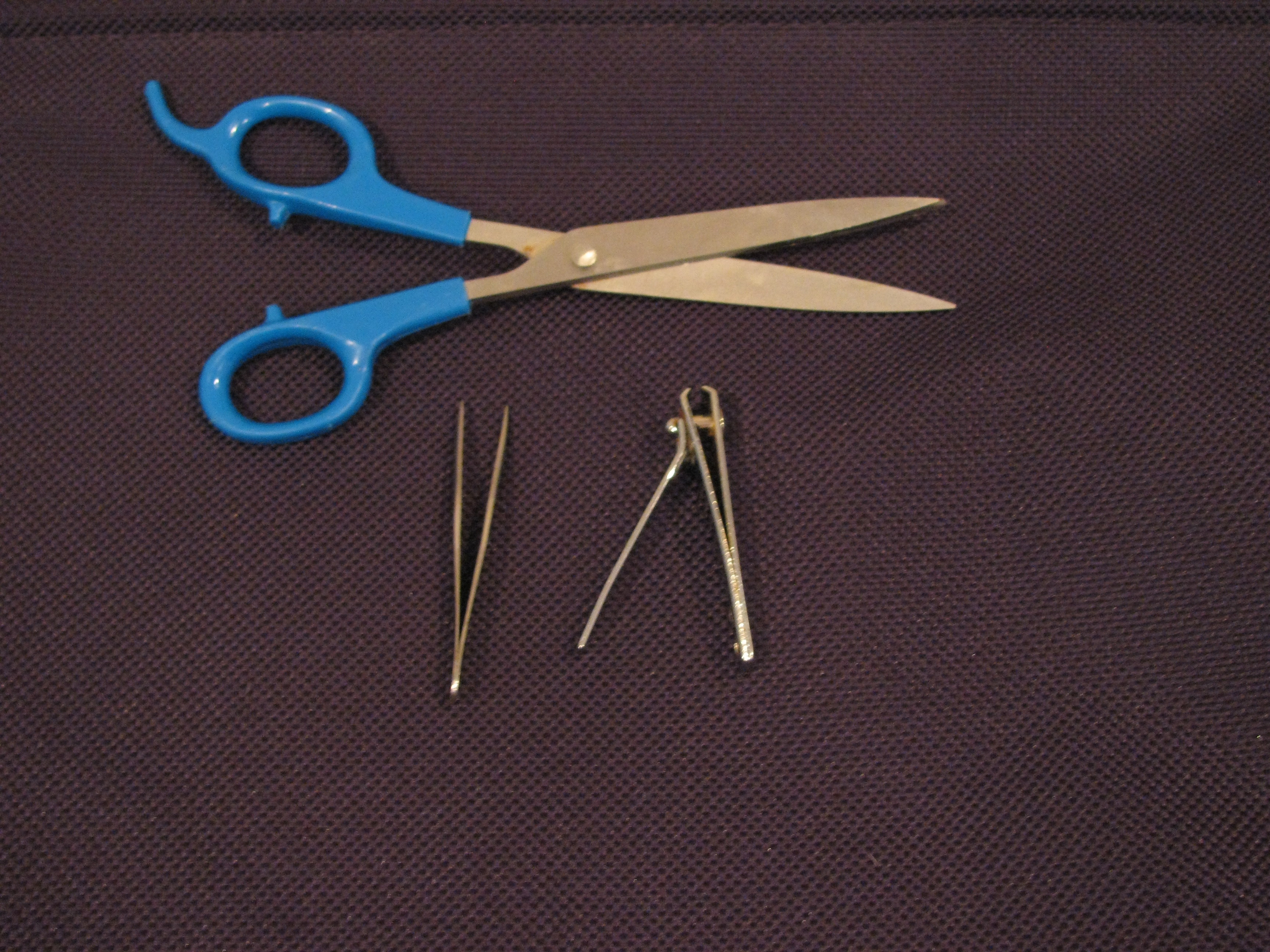
- You will also need 1. scissors 2. tweezers with sharp ends 3. nail clipper
-

- Inserting thumb and middle finger into loops, use scissors to cut cardboard backing away from plastic sleeve containing luggage strap.

-

- If scissors fail to pierce packaging, stab with tweezers or clip with nail clippers.

-
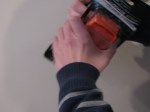
- If sharp implements fail, tear packaging apart with your bare hands.

-
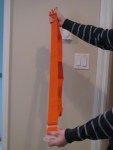
- Pull out the strap and inspect that its edges are straight and the webbing is undamaged.

-
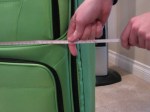
- Measure suitcase girth
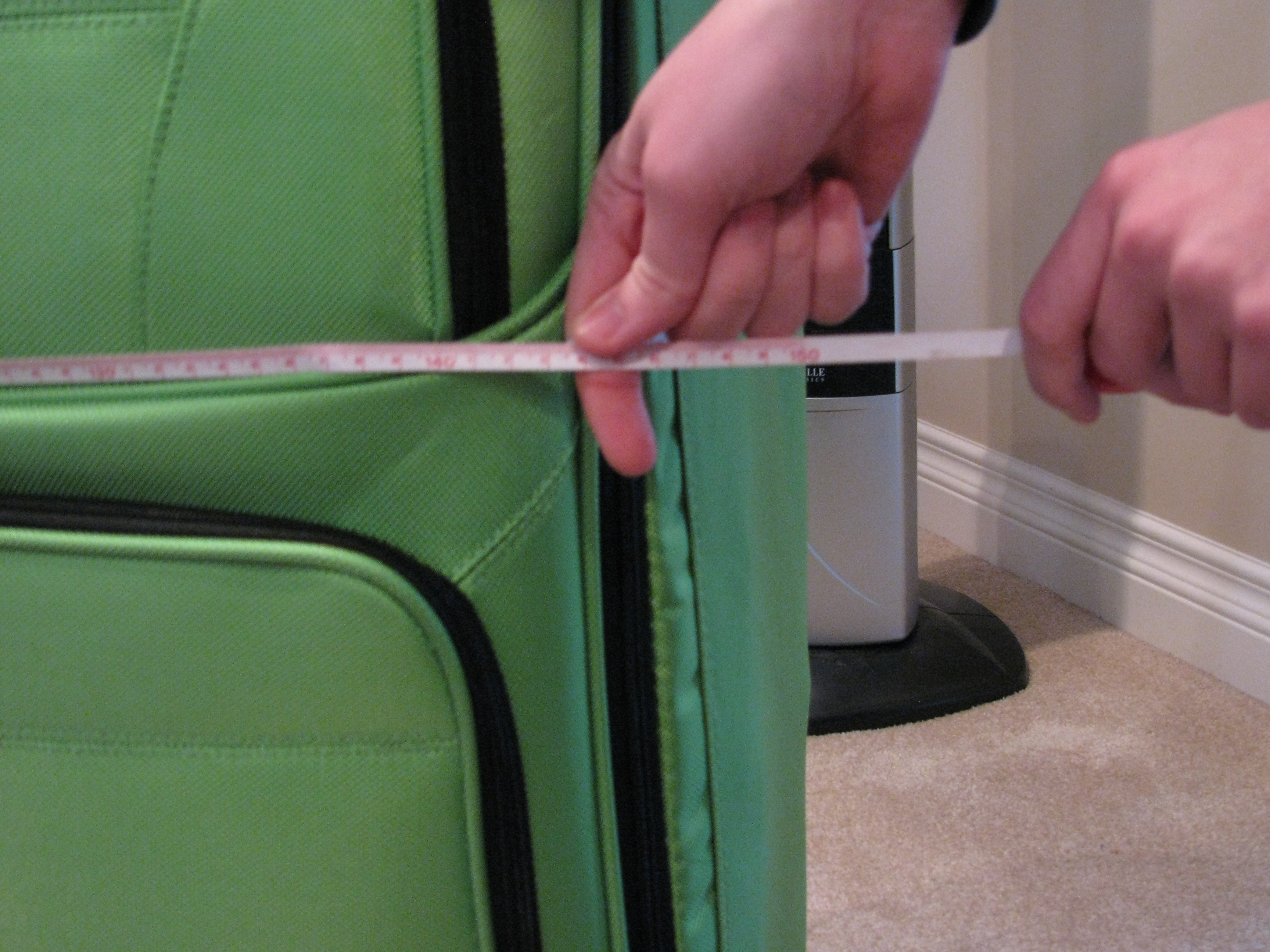
-
- Advanced users can skip measuring tape step and directly configure strap length by holding it around middle section of the suitcase.

-
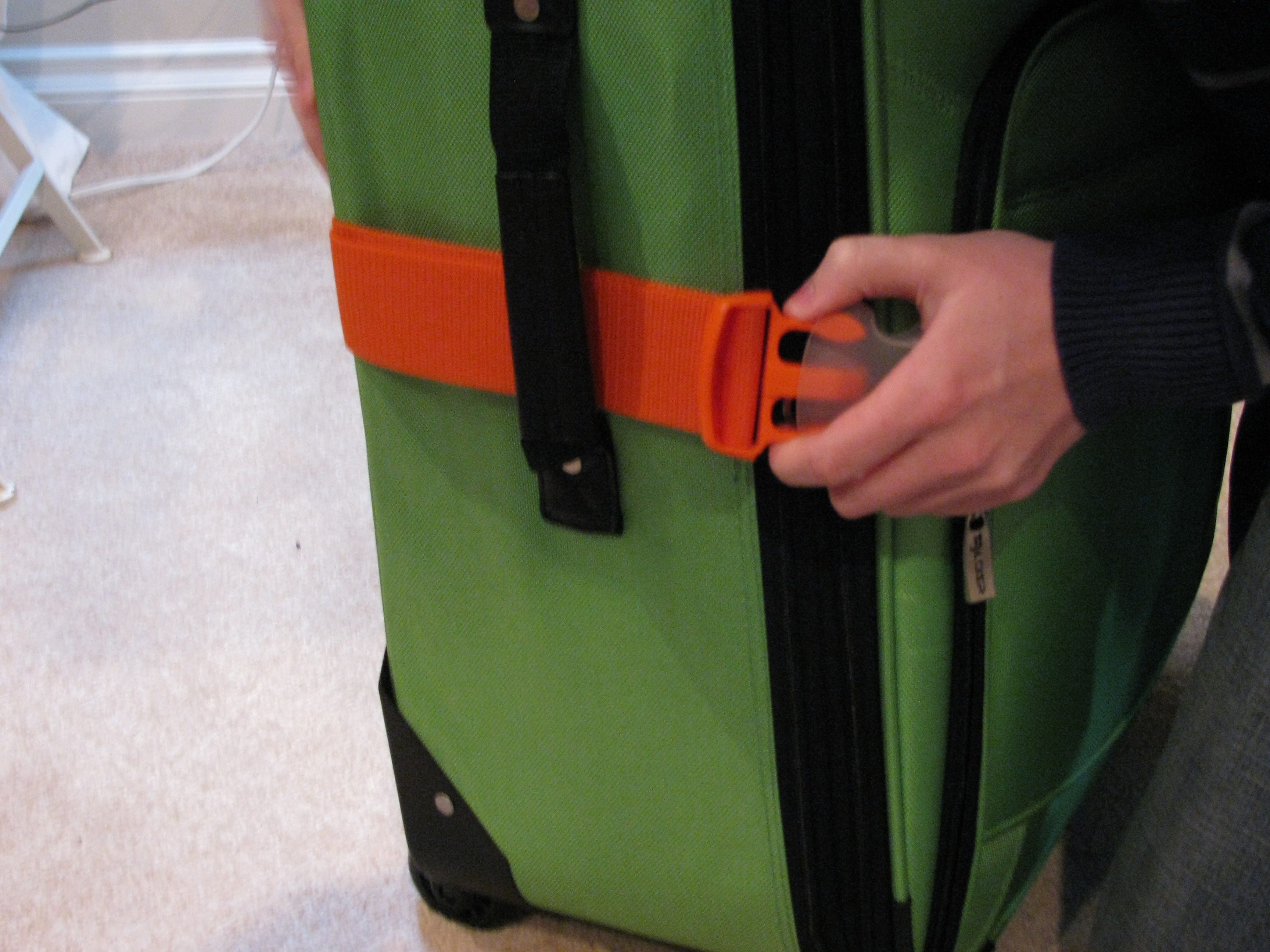
- Wrap strap around middle section of the suitcase, sliding under handle for added security.
-

- Do not place strap at diagonal.

-
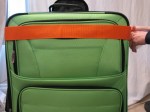
- Place luggage strap at centre of suitcase, not at top or bottom ends.

-

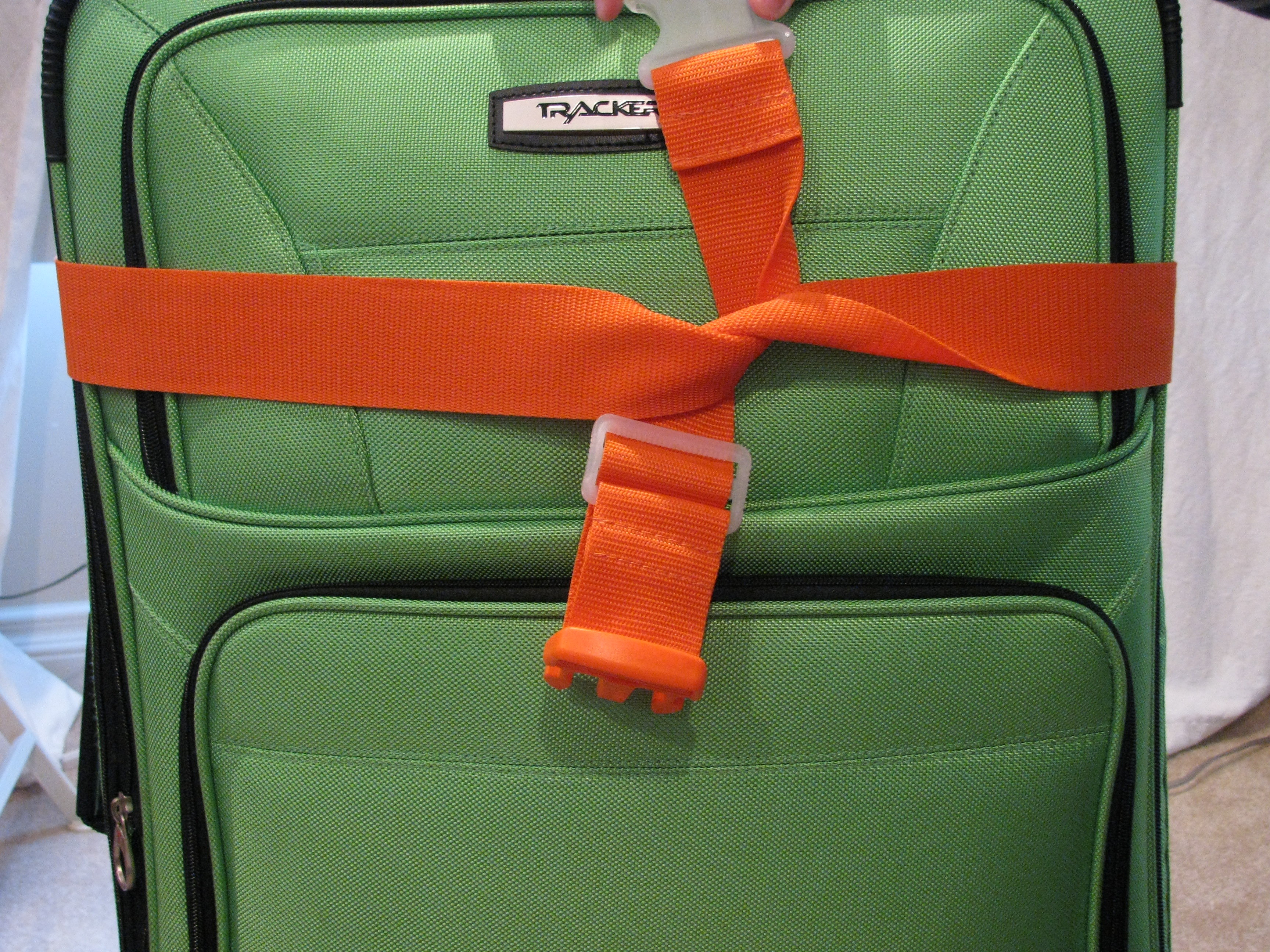
- Securing the strap in place with a bow or knot will not provide maximum protection.
-

- Attach strap buckle ends by fixing together until buckle pops into place.

Packing day
It takes me two hours to leave the house, ergo with a little application of mathematical principles (multiplication, the most complex math I know), it would appear it will take me three weeks to leave the country. We fly on Tuesday, so I’m already behind schedule.
Quasi-moving packing is not the same as three-week excursion packing, but with nowhere else to go, I turned to Rick Steves, American travel guru to Europe http://www.ricksteves.com/plan/tips/packlight.htm. Steves recommends packing no more than 20 lbs. in a carry-on bag and to prove it can be done, his website has a video tape of him unpacking his stuff.
It looks like a bit of a magic trick – he puts the suitcase on the bed, opens up the top and like a magician pulling rabbits out of hats, pulls out a stream of clothes and travel gear. I suspect there was a hole in the bottom of the suitcase and all that stuff really had been hidden in the mattress below.
When we moved to Spain in 1999, we were each allowed two pieces of luggage weighing in at 75 lbs. each, if my memory is correct. We packed to maximum capacity, dragging our aggregate body weight overseas. Occasionally, we were upgraded to executive class, allowing us to pack three bags – or was it four?
Our luggage-weight ballooned to the point that when our younger son and I landed in Chicago we had to hire a porter. I felt like Elizabeth Taylor, minus the striking beauty and wealth. Nevertheless, the porters’ expressions when they saw us coming down the ramp at O’Hare was a sight to behold. We may have had to hire two, but I can’t remember for sure, mostly because I couldn’t see above the luggage, which included a large crate with an 80 lb. dog.
On that round-the-world excursion, we landed in Australia with a baggage-load so extreme, we had to mail several hockey-bags worth of stuff back to Canada at a cost exceeding $400 (in 2000 dollars – which would probably be about $408 now). That’s a lot of postage stamps.
I’m trying to avoid all that by sticking to the strict dietary-packing guidelines Air Canada is forcing on me now, but packing for four seasons and more than a year overseas is tricky business. I managed to get everything into one suitcase, except for my winter gear. I’ll still be able to do it, but it will take two trips (one suitcase apiece) instead of one.
____________
And now for the serious middle-age traveler who is mildly curious about real luggage advice:
- Expensive versus cheap luggage: Go with cheap. We’ve hauled Wal-Mart-issue suitcases around the globe without any seam-ripping, zipper-splitting, contents-bursting effects.
- But what if the cheap stuff breaks anyway: It is more fun replacing a $40 suitcase than a $697 suitcase.
- What if I’m still nervous about my luggage’s durability? Luggage shops sell luggage straps for about $4 that you can secure around your bag just in case the zipper does give way. Airlines usually provide giant heavy-duty plastic bags with postage-standard tape at no cost so at check-in you can bag and seal your goods.
- Hard-case or softshell luggage: Go with soft-shell. In a non-scientific survey of two (my cheap luggage versus my friends’ high-end/status luggage, my soft (hockey bag or fabric suitcase with frame) luggage was able to take the squeeze of the luggage compartment. Hers cracked, spraying blueberry jam over all their clothes.
- Who carries blueberry jam on a trip to the tropics? Despite what North America’s eastern Maple Syrup lobby tells you, it is blueberry jam, not maple syrup, that sets us apart from other countries, therefore, all North American cottagers carry wild blueberry jam on out-of-country trips. It is currency in foreign lands.
- Carry-on luggage: Wheeled suitcase or backpack: If possible, take a hybrid that does both. Touring calls for stair-climbing (think of all those beautiful hilltop villages in Spain) and pulling a wheeled case is like sightseeing with a stroller, ie. it’s work.
- What to pack: As little as possible. It’s better to pack light and buy whatever else you need at your destination, even if you have to discard it or give it away to strangers before boarding the flight home, or do what I do, which is
- Pack heavy: But engage in a year-long weight-training program to bulk up so you can sling 50 lb. suitcases with ease.
Face-to-face with a government bureaucrat
Have just finished reading up on friends’ travels through places tropic populated with elephants and water buffaloes and have to say: Glad I’m not there.
Her hubby had to run back to Canada to deal with errant tenants, leaving the wife in a village hut with a sheet for a door. She was recovering from Dengue fever, which made her feel as though her bones were broken.
I suppose it’s part of the adventure, but if Dave left me in a remote village with cantankerous ungulates and a fabric lock-less door, heck would follow.
But she is having fun, if catching tropical diseases can be called that, and good for her.
Me, I’m still comfy in my home with plenty of solid doors, but not for long.
The trip to the Swiss Consulate was a disappointment.
The traffic into Vancouver was non-existent and we virtually whisked our way down to Canada Place on the shores of the Burrard Inlet. We found the Consulate with only a little fuss, were admitted immediately and met with a polite and exceedingly helpful bureaucrat who in under 15 minutes gave Dave his visa and said I could get through the border without trouble and finish up my visa application while in Switzerland.
“It will take about a week,” she said.
This ruins everything.
I’ve set my expectation-o-meter to “appalled” and having reality smack my worldview around requires that I get a new attitude. Matters worsened on the ferry ride home when we ran into friends returning from holiday and passed the 90-minute journey over coffee discussing how their car got broken into while on their week away. I loved this story. It was proof that travel is annoying.
The car-break-in, however, was interrupted by security and so the car was undamaged and nothing was stolen. More proof that I am wrong that travel is just asking for trouble.
This has put me in a dour mood, but things are looking up: It appears that the amount of stuff I need to pack will exceed the space available in our suitcases, thanks to the airline’s recent baggage allowance changes.
Ah, something to be miserable about … that’s the stuff.
Visa day
Today we make the 45-minute-drive, 45-minute-ferry-wait, 90-minute-ferry-ride, 40-minute-drive to the Consulate to get Dave’s visa. It’s a cumbersome trip that starts with a 4 a.m. wake-up, but it’s necessary because the only alternative is to mail Dave’s passport to them.
In other words, the passport, a document issued by a federal bureaucracy, would travel via Canada Post, a second federally overseen bureaucracy, to a foreign federal bureaucracy for approval. You may notice I used the terms “federal” and “bureaucracy three times.” Yes, mailing a passport would trigger the Bermuda Triangle Law of Bureaucracies, in other words, doom would inevitably follow.
Note: For this excursion, I get up at 4 a.m. Dave gets up at 4:45. This is one of the usual gender inequities of nature, that wherever a couple needs to go, the man can get ready in under five minutes. A woman, through no fault of her own, needs 90 minutes prep-time at a minimum. Am I wrong about this?
Let’s not discuss it now. It’s 5 a.m. as I write, and I’m a little growly, owing to the early hour and the fact that my own visa is nowhere in sight.

Starbucks in Bern.
- Starbucks in Bern, Switzerland – signs of civilization.
How I got this way
“You’re living the dream,” is what people say when they learn we’re heading to Europe for an extended stay, but I don’t always feel that way. Hotel-living, travel, sight-seeing, modest cardiac-safe levels of adventure – what’s not to like?
Bureaucrats, that’s what’s not to like.
Yesterday’s discovery that our designated bureaucrat forgot to process my visa application is a classic twist in the overseas-working-holiday picture. In short, whatever you expect the bureaucrat to do, whatever he/she says they’re doing – it is not so.
And the fact that they hold your passport and identity information, plus wield the awesome powers of “the state,” forces you to be your better self when dealing with them, when really you want to be your five-year-old, tantrum-throwing self.
Our friends Al & Nina (not their real names – must shield their identities from foreign bureaucrats who might wreak horrible vengeance on them for sharing this story) danced this dark waltz with Spanish visa authorities who insisted she stay in Canada during her application while sending him willy nilly around the globe fetching documents to feed into their paper shredders (I’m sure this is true).
After sending Al to Japan on a boomerang mission to fetch security clearance from a northern district’s police department, because they had lived there once, and then return immediately to British Columbia, and then back to Toronto to pick up their visas, a Spanish official handed Al his visa, with a dark comment about Al stealing jobs from decent, hard-working Spaniards (Al’s company was creating 400 jobs for those Spaniards, but visa bureaucrats are weak on math).
And then, the official turned to Nina and informed her that her visa had been denied. Nina – who had endured a forced year-long separation from her beloved because of this bureaucrat – is ordinarily a suave, well-dressed, dignified, intelligent and articulate woman.
As she threw herself against the embassy’s safety glass, she reminded the official that while inside the embassy she “may technically be on Spanish territory, but you have to come out sometime, and when you do, you’ll be in MY country and I”LL be WAITING.” Nina managed to say a few more things as her husband physically dragged her out of the building, but I don’t want this blog to get blocked for inappropriate content, so you will have to imagine the rest.
We are waiting for the day that embassy’s security tapes get hacked and put up on Youtube. It’s going to be a doozy of a show.
In the meantime, I’m coping with my own visa-stress by applying generous dollops of Breyers Black Forest ice cream to my thighs,via my digestive system, of course.

Just about the right amount of ice cream required to soothe bureaucrat-burn.
Four hours later ….
…… have just learned that only Dave’s visa has been approved. Drama!
Visa-Watch: Over
Murphy’s law: Just as I finished up the last post about “no news on the visa,” an email came in from the Consulate. The visa is ready.
Visa-watch
Visa-watch Day 3: Nothing. Just as expected.

Our dog, certified for global travel by Canada, Spain, the U.S. and Australia. Thank you, Spanish immigration services, who by the way, never asked to see his documentation when we arrived in Madrid.
In 1998, Dave was offered work in Madrid, Spain. With assurances that a visa would take only four months to process, perhaps quicker because Dave’s employers hired “international transfer professionals” to hurry things along, we started packing, said good-bye to everyone in a flurry of farewell dinners, sent Boy-the-first over to school in Germany so we’d be on the same continent (he was university-age by then), and notified Boy-the-second’s school to prepare his transcripts for transfer.
And then waited another year before the visa was approved, raising suspicions that we harboured a seamy criminal past that was so unsavory even the Spanish couldn’t abide it.
And so as the year-long wait waxed on, exchanges of this sort grew: At the grocery store, a cashier asked, “Aren’t you supposed to be in Spain?” causing the other cashiers and a mob of shoppers to freeze, turn their eyes on me, waiting (hoping) for a public confession (small towns really operate on this “choral” level – live in one and you will know).
This happened when I filled up the car with gas, picked up Boy-the-second at school, showed up at committee meetings, ordered prescriptions, browsed books at the library, mowed the lawn, gathered my mail … you get the picture.
Meanwhile, Spanish bureaucrats had their fun with us, making us race around getting our dog certified by the Canadian Food Inspection Agency for transport (the word “food” in the certification process raising our suspicions about the Spaniards’ intentions), getting police clearances from everywhere we had lived before, even for our sons who were minors on all our past relocations, getting our fingerprints at the RCMP station, and letters from our doctor swearing we didn’t suffer from psychosis, parasites or dreaded diseases (true – I just found those letters while clearing out some old files last week).
But what did we expect from a country famous for the Spanish Inquisition?
Paperwork: The price of travel
We don’t have criminal records, parasites, psychotic disorders or flesh-eating disease and so our expectations on processing visas is that things will go smoothly. This is not the case.
A complicating factor is the nine-hour time difference between Europe and Canada’s west coast so we can really only communicate ‘real-time’ between midnight and 7 a.m. We are over 40 years of age, therefore the concept of being awake at these times is unthinkable, if not impossible.
Hence, instead of emailing back and forth to settle visa-application difficulties within the space of an hour, emails dribble across the ocean at the rate of one a day, and sometimes only one a week, depending on the workload and motivational level of several bureaucrats. In other words, we are in purgatory – neither heaven or hell, but somewhere worse: Limbo.
This is made more fun by the fact that we don’t speak German/French/Italian/PigLatin and their English is somewhat off. I don’t want to criticize their English overly much because it is roughly 5,007,813,492 times better than my French.
We also learned while living in Spain that one culture’s idea of expediency is not necessarily shared by another’s. This time, however, we’re dealing with the land of clock-makers and given that they are the arbiters of punctuality (ie. clock/watch-makers), we expected a little better. The jury is still out on whether this is the case.
Here is what the process looks like so far.
Monday – Dave to bureaucrat: Who applies for the visa? Do I or do you?
Friday – Bureaucrat to Dave: I don’t know.
Monday – Dave: Can you find out?
Saturday morning – Bureaucrat: I’m very busy.
Monday – Dave: I just checked the government website. It looks as though we both can, but if I do, it will take over four months, but if you do it, it will take two weeks.
Wednesday – Bureaucrat: Okay, I’ll do it as soon as I get back from vacation.
By this time three weeks have passed and we have achieved exactly nothing except to perhaps annoy a bureaucrat or two.
This has gone on roughly for three months now and Dave is mightily annoyed that he has to keep pushing. I, however, worked in a newsroom and dealt with the Canadian/British Columbia governments for years and so expect precisely nothing to make sense, therefore my mood is unaffected.
Last month, we learned our papers were approved in Europe, however, the Consulate in Vancouver cannot stamp our passports because they must wait for the overseas authorities to send them our file – this is done electronically, not by donkey-and-rowboat, but you would never know it. More than three weeks have passed and the file remains in Europe, probably dining on chocolates and pastries.
Finally, today Dave learned that the reason the bureaucrats-in-Europe have not sent the file to their bureaucrats-in-Canada is that “no one has requested it.” True. It would seem to us that the very fact of applying for a visa is intrinsically linked to the concept of asking for said visa, but these bureaucrats are precise if nothing else and having done everything else to give us a visa, they are now waiting for us to “ask for it.”
And so we have. In theory we could be only a week away from departure.
In the meantime, I’ve posted the best sugarless frosting recipe ever. Check it out https://hobonotes.com/dining-recipes/
The first place

From Dave's "check-it-out" visit in January 2011
All trips begin long before arrival at the airport, packing the trunk and buying health insurance. They begin when someone wakes up one morning, looks out the window and thinks, “I’ve seen this before. In fact, everyday.”
That is the beginning. The thought hangs in the air for only a brief moment, until the next thought, which is usually, “Time for coffee,” or if one is married or similarly espoused, “I wonder if my beloved will bring me coffee in bed. Maybe a little nudge will help.”
Travel ideas germinate and these days, they are growing like crazy, if the “interwebs” is any measure. Travel blogs are everywhere and they’re full of great information, most of which goes un-noticed.
I know this, and yet I’ve chosen to blog at the behest of only a few people. Maybe three. It doesn’t take many readers for me to put fingers to keyboard.
But I drift. The point I’m trying to arrive at is that we’ve passed the germination stage of this journey and are still at the static stage, which is that every morning Dave gets up and checks his email to see if our visas have been approved.
You won’t see many pictures of the anticipating traveler hovering over his keyboard every morning. It’s just not glamorous enough, but the truth is that these days, every trip starts this way. If not for waiting on a visa, then for making travel-arrangements, browsing hotels, destinations and the like.
I’m not complaining. This is an improvement over travel circa 1990 when all trip-planning was preceded by 38 minutes of muzak as one waited “on hold” on the phone, stuck to the house by the phone cord, the then-modern-day umbilicus to the travel-mothership, ie. travel agents and or travel-related businesses (airlines, usually).
Those were dreadful days. Let’s not speak of them.
That is where we are today March 21, 2011. Still checking our email, still hovering over the laptop waiting. It’s not exciting, but it is part of the trip.
 HoboNotes