
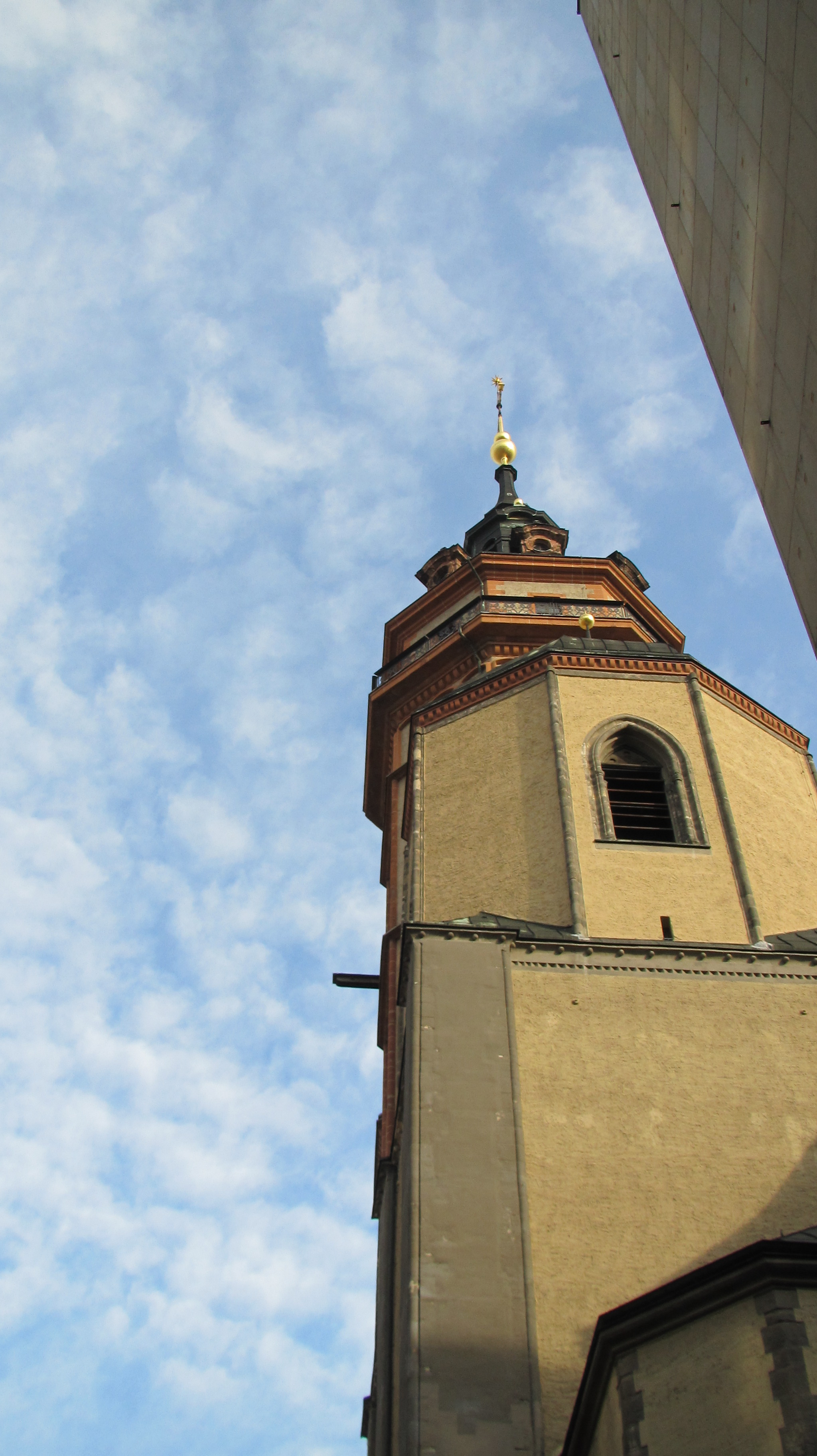
Leipzig Nikolaikirche, the birthplace of the teardown of the Berlin Wall.
Some bad things have happened to my family in Germany, like European airlines extorting money from us in $500 chunks to let our dog or a bike pass through Frankfurt airport, and then my Dad was arrested there for refusing to be an informer for the Soviets. Tough luck, that.

The Berlin "Wall" as it appeared around the time my father tried to cross into West Berlin.
But none of those things occurred on this trip to Leipzig, so hopefully our bad run with Germany is over, which is a good thing because, gosh, their food is much better than expected, and certainly better than what they fed my Dad in that jail.
Leipzig has some sadly decomposed old grand buildings, such as the Astoria, which are almost as interesting to look at as the medieval quarter of town. The city’s northern outskirts are somewhat depressing, stretching out in decayed old industrial zones perhaps still lagging behind due to Communist rule even 30 years after the Germans gave the Soviets the boot. Nevertheless, the city centre outside of the historic quarter is lined with beautiful old architecture.
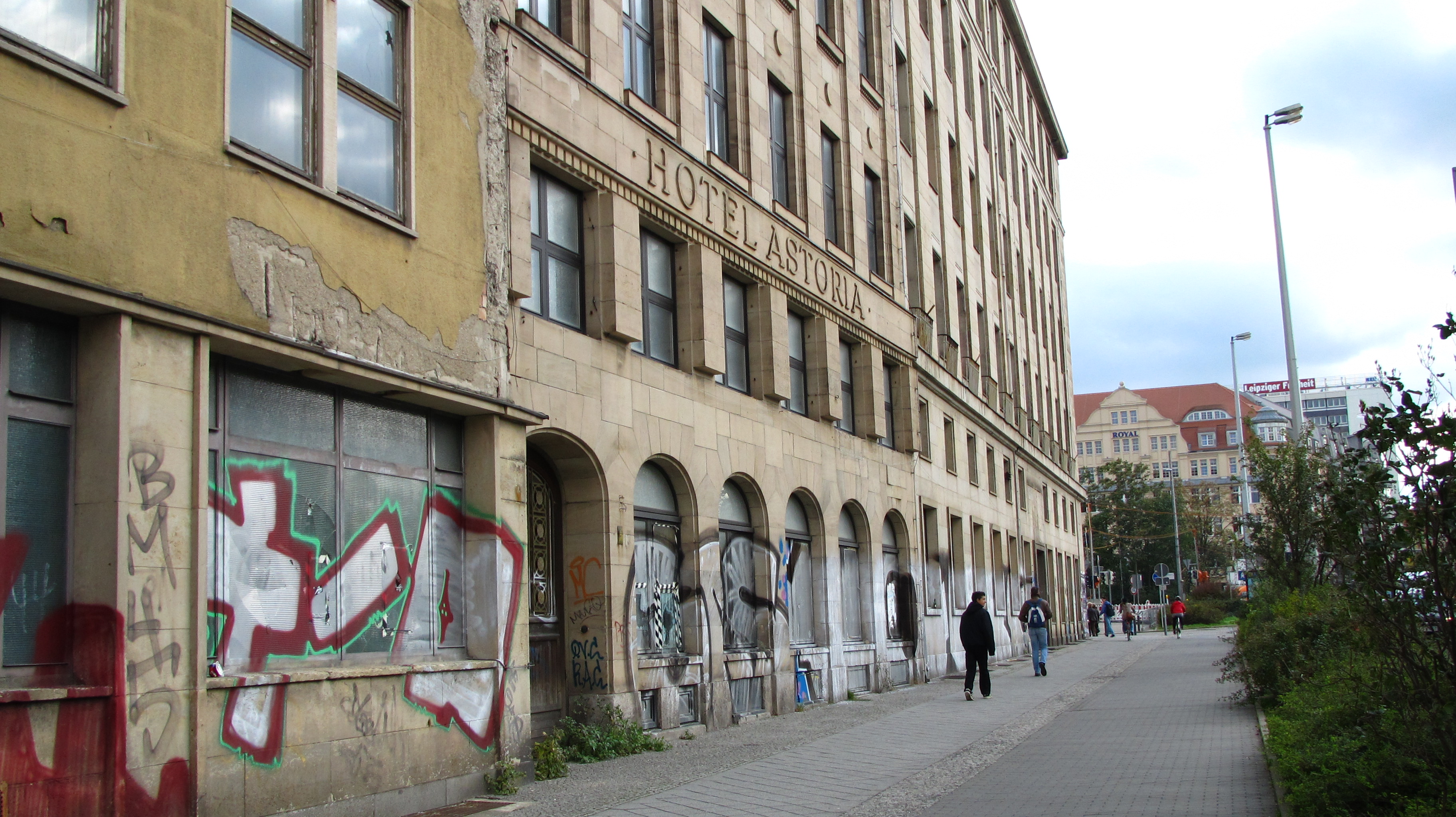
Leipzig's Astoria hotel, a grand old dam now in serious disrepair.
Less well-known to North Americans (but very well-known to Germans, I imagine) is that Leipzig was a beachhead of sorts during the Second World War. The Brits and Americans were busying themselves with bombing Berlin, when one night the Germans launched a significant concentrated counterattack, punching a big hole in the Allied Forces air fleet. The next night, the Nazis readied their forces for a repeat performance only to have the Allied fighter planes skirt around Berlin and hit Leipzig hard. It was a shock to the Germans, as the Allied Forces had never gone that far into Germany, and in fact, it was thought at the time that such a distance was out-of-range and safe from airstrikes.
Leipzig also housed a concentration camp. As the Allied Forces moved in, 12 Nazi guards torched a bunker with 500 prisoners in it, many of them Russians and Czechs. As some prisoners escaped the flames, they were gunned down by the 12, and those that escaped the bullets died in the electric fencing. Very few lived to relate the story. It’s the sad and shocking history of Germany, and another testament to the fact that there is no army so savage as a defeated one.
Hard to believe the culture that nurtured those 12 guards is the same one that was home to Bach, Mendelssohn, Goethe, as well as being the birthplace for Schuman. Leipzig still has a vibrant arts community, a university and parks, although I only walked into one park and immediately turned around as it seemed to have a derelict population. Probably nothing wrong, but why take a chance?

Bach statue outside of Thomaskirche where he is buried.
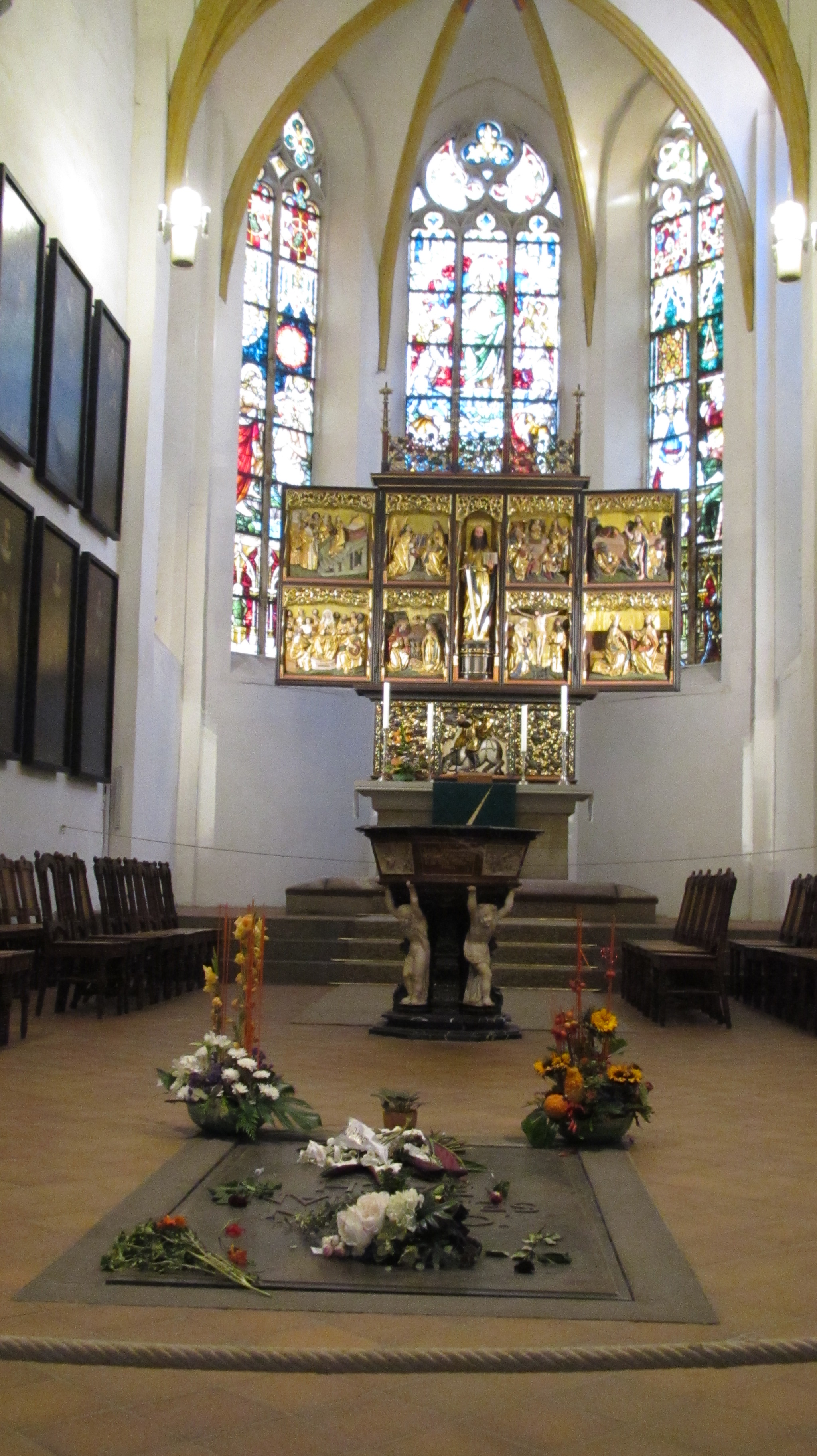
Bach's burial site in the austere Thomaskirche. We hung around outside the building one night, listening to an organ playing. Most of the lights were out, and the church was dark. It was beautiful and haunting.
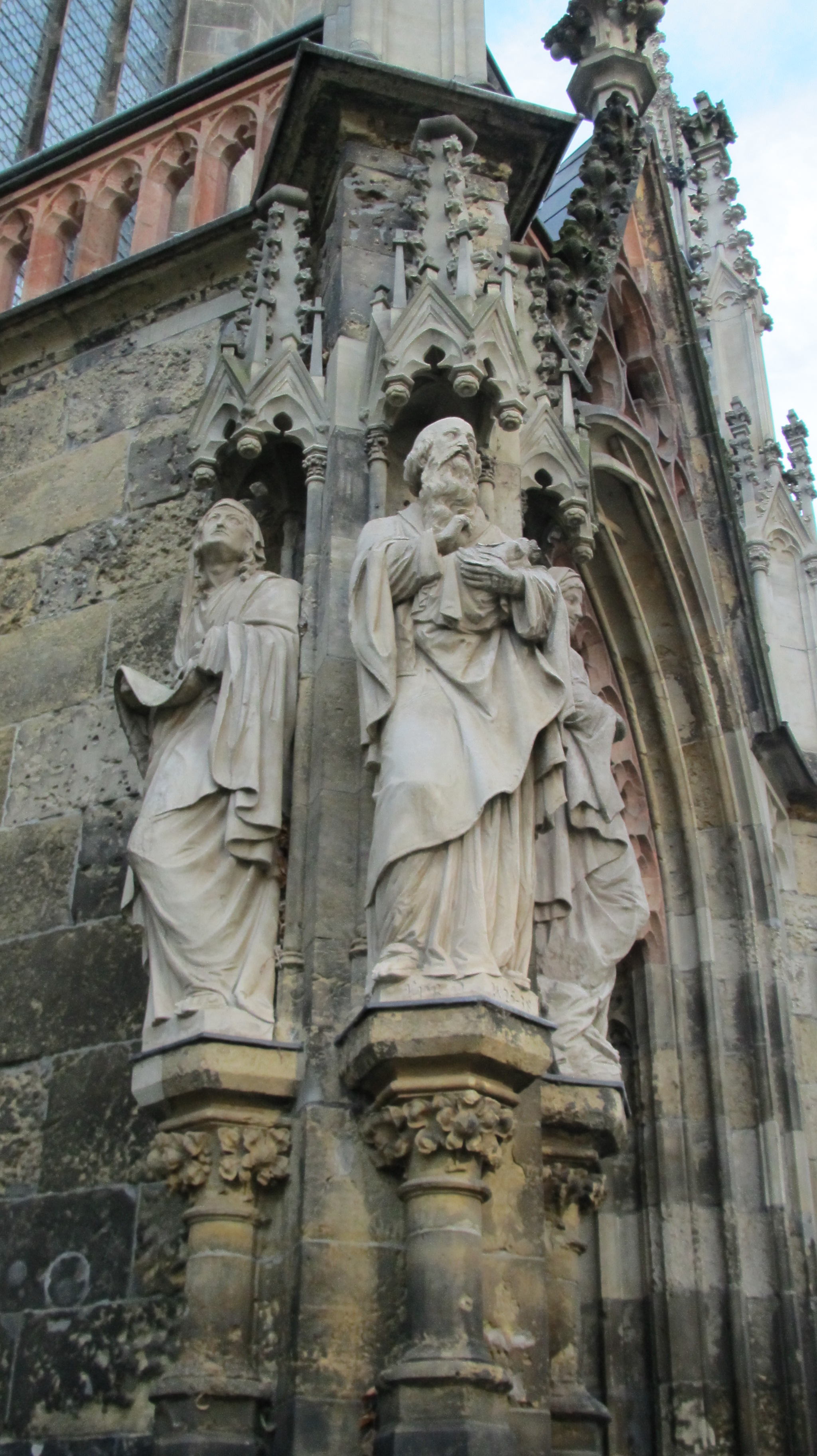
If I had learned German instead of French, I would know what this inset statuary is all about at Thomaskirche. As it is, I don't know a thing.
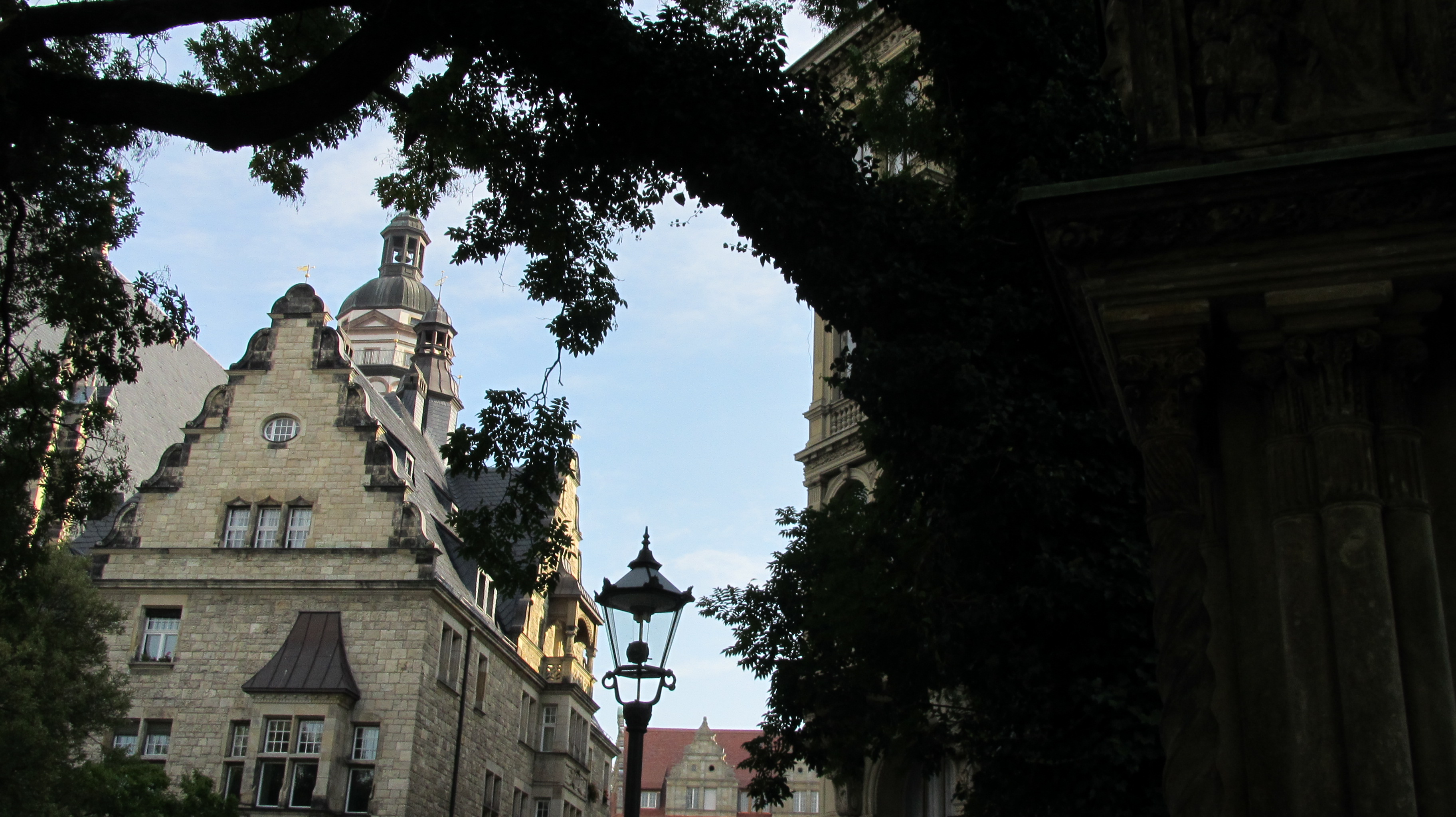
Leipzig, a past that is dark and light. An amazing place, and worth the trip.

 HoboNotes